 Web HostingBudget-friendly shared hosting plans
 Domains SearchFrom .com to unique country domains, explore and register extensions worldwide.
 WordPress HostingPower your blog or business with WordPress hosting.
 Email HostingSimple, secure email hosting that helps you stay connected and professional.
 Reseller HostingStart your own hosting business with easy and reliable reseller hosting plans.
 AffiliateJoin our affiliate program and earn commissions every time you bring in new customers.
 cPanel HostingHosting powered by cPanel, the world’s most user-friendly control panel.
 Windows HostingBuilt for Windows applications and websites
 IN Domain PricesDon’t miss out on the best domain deals in India!
 WHOIS LookupFind out who owns a domain name with a quick and easy WHOIS search.
 Domain TransferTransfer your domain to us and enjoy reliable support every step of the way.
 .Com DomainGet the most trusted domain for worldwide credibility
 All TldsSearch and register domain extensions worldwide.
 SSL CertificatesProtect your website with trusted SSL certificates and keep customer data safe.
 VPS HostingPowerful virtual servers. Full root access. Reliable uptime.
 Managed VPS HostingNot a tech expert? Choose our fully managed VPS service.
 Dedicated ServersTake full power and total control of your own physical server.
 AI Website BuilderCreate stunning websites instantly with our easy AI builder.
 Online ShopBuild your eCommerce store easily, no coding, just growth.
 Web Design ServicesGet a website built for your brand and designed for your goals.
 Contact UsReach out to us for support or questions.
 SupportGet answers and how-to guides for all our services.
 BlogRead our latest blogs on web hosting, online business, digital marketing, and other helpful topics.
The internet has done something extraordinary over the last decade.
It has quietly torn down the walls that once separated people with capital from people with ideas.
Today, a 22-year-old in Coimbatore can compete with an established agency in Mumbai.
A homemaker in Jaipur can run a thriving export business from her kitchen table.
The barrier to entry has never been lower, and the timing, right here in 2026, has never been better.
Be it that you are a college student looking for your first income stream, a salaried professional itching for a side hustle, or someone who simply wants to be their own boss, this guide is for you.
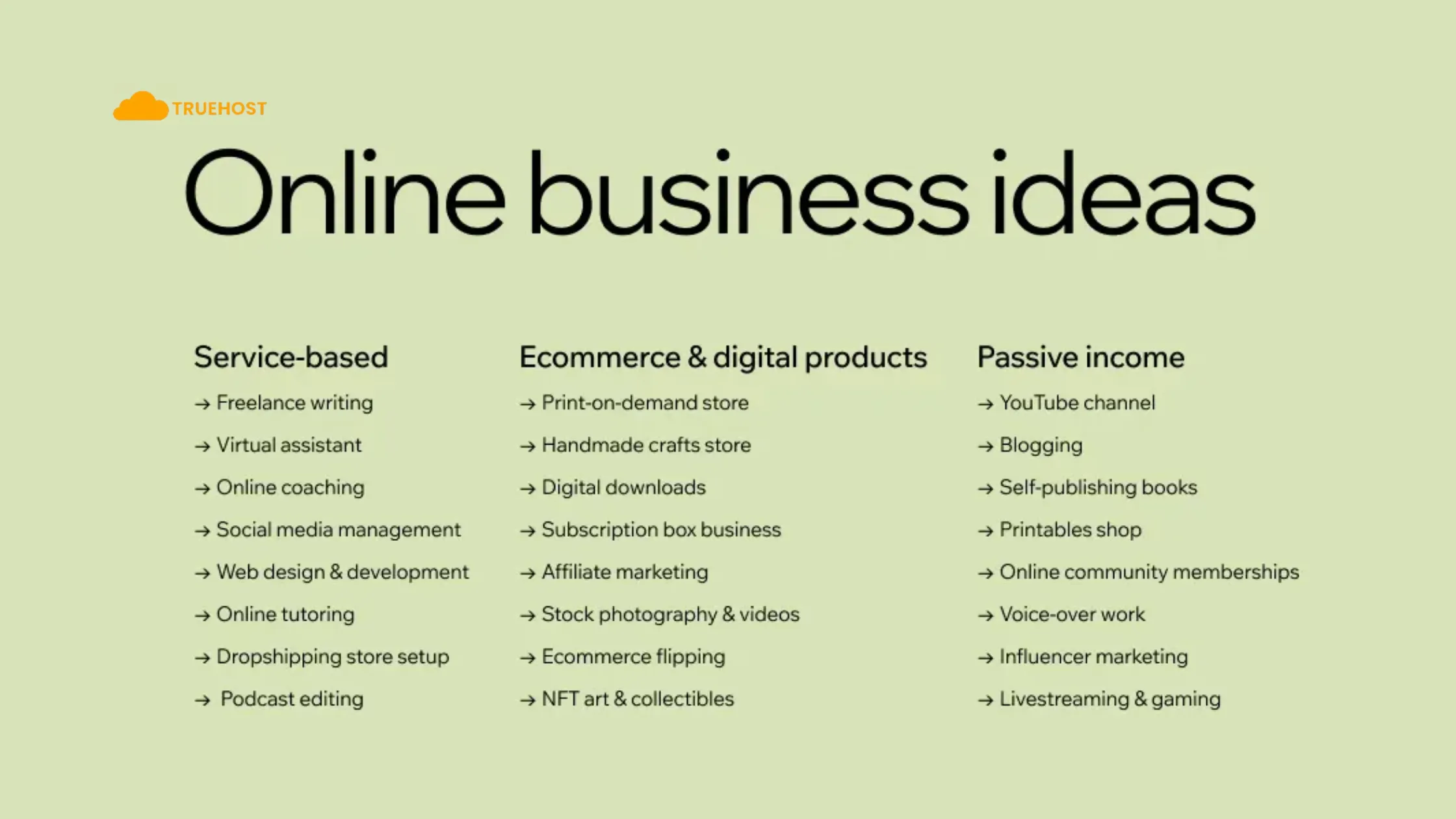
I have curated 10 real, trending business ideas suited for the Indian market.
Ideas that are actionable right now, require minimal upfront investment, and have genuine profit potential.
Why 2026 Is the Perfect Year to Start
Before we dive into the ideas themselves, let us acknowledge the moment we are in. India’s digital economy is expected to cross $1 trillion by 2030.
And the scaffolding being built right now like UPI payments, 5G rollout, government MSME schemes, and the explosion of e-commerce, is creating fertile ground for small businesses to thrive.
The pandemic shifted consumer behaviour permanently. People now buy groceries, book tutors, order meals, and hire freelancers online without a second thought.
That shift is your opportunity.
The government has also actively simplified the registration process for small businesses.
If you are not yet familiar with Udyam registration, the GST composition scheme, or FSSAI licensing for food businesses, do not worry, we cover the essentials in a quick-start checklist at the end of this guide.
a) AI & Automation Consultant for Small Businesses
Investment: Near Zero
Here is a truth that most people are not talking about loudly enough: the small business owner running a saree shop or a hardware store desperately needs tech help, and has no idea where to find it.
That is where you come in.
As an AI & Automation Consultant, your job is to bridge that gap. You do not need to be a coder.
You need to know how to set up a customer service chatbot using tools like Tidio or ManyChat, automate WhatsApp follow-ups, schedule social media posts, or connect apps using Zapier.
These are learnable skills, and dozens of free YouTube courses and certifications can get you started within weeks.
The pricing potential here is serious.
A small business owner who saves three hours a day through automation will happily pay ₹10,000 to ₹30,000 per month for that service.
Start with one client, document your results, and build a portfolio. Word of mouth in the business community travels fast.
b) Millet & Healthy Snack Production
Investment: ₹3,000 – ₹5,000
The health food revolution in India is not a passing phase, it is a seismic cultural shift.
Ragi laddoos, jowar chips, foxtail millet cookies: these are products with real, consistent demand from urban middle-class consumers who want clean labels and recognizable ingredients.
Starting a home-based millet snack business is one of the most practical low-investment ideas on this list.
Your raw material costs are minimal. You already have a kitchen.
And platforms like Instagram and WhatsApp Business groups make distribution surprisingly manageable from day one.
The key to standing out is branding. Invest a little time in clean, minimalist packaging and a consistent visual identity.
A product that looks professional sells at two to three times the price of one that does not.
And with FSSAI registration, you can also approach local organic stores, corporate gifting companies, and online marketplaces like Amazon Fresh.
c) Thrift Store (Reselling Pre-Loved Goods)
Investment: ₹0 with Consignment Model
The thrift and resale market in India has exploded, driven by Gen Z’s love for unique finds, sustainability consciousness, and the universal appeal of great deals.
The consignment model is the smartest way to start: collect pre-loved items from friends, family, or community groups, photograph them beautifully, and list them on Instagram Reels or platforms like Meesho.
You only pay the original owner after the item sells, meaning your inventory cost is effectively zero.
What makes this work in 2026 is the content angle. The most successful thrift accounts are not just shops, they are personalities.
Show your sourcing process. Do haul videos. Style the pieces. When your audience trusts your taste, they buy with confidence.
d) Virtual Assistant Services
Investment: ₹0
Remote work normalized the idea of having an assistant you never meet in person.
Founders, solopreneurs, and small teams across the world, including right here in India, are outsourcing email management, calendar scheduling, research, data entry, and customer support to virtual assistants who work from their homes.
You do not need a degree for this.
You need to be organized, responsive, and reliable. Monthly retainer packages between ₹15,000 and ₹40,000 are standard for experienced VAs.
Start on platforms like Upwork or Fiverr to build your first few reviews, then transition to direct client relationships for better rates.
e) Print-on-Demand (POD) Store
Investment: ₹0 – ₹2,000
Print-on-Demand is one of the cleanest business models in existence. You create the design.
The supplier prints and ships it when someone buys it. You never touch a box of inventory.
There is no warehouse, no bulk purchasing risk, and no unsold stock cluttering your house.
In India, the POD ecosystem has matured significantly.
Whether you are designing political satire tees, regional language phone cases, cricket-themed mugs, or motivational posters, there is a niche audience for almost everything.
Tools like Canva make design accessible even if you have zero art school training.
The real skill in POD is audience building.
Pair your store with a focused Instagram or Pinterest presence, and you have a passive income engine that runs while you sleep.
f) Digital Marketing & SEO Consultant
Investment: ₹30,000 – ₹50,000 in courses
Every business in India with a Google My Business listing and a Facebook page is silently crying out for help.
Most small business owners know they need an online presence but have neither the time nor the knowledge to build one.
If you can write SEO-friendly blog posts, run Instagram ad campaigns, manage Google Ads, or build a basic email marketing sequence, you have a marketable service.
Start by offering your services at a discounted rate to two or three local businesses. Deliver results. Take screenshots. Those case studies become your portfolio.
With genuine results to show, scaling to ₹80,000 to ₹1,00,000 per month by handling five to eight clients is absolutely realistic within 12 to 18 months.
g) Home Tiffin Service (Cloud Kitchen)
Investment: ₹5,000 – ₹15,000
There is something deeply human about home-cooked food.
In a world of ultra-processed convenience meals, a reliable, hygienic, and lovingly prepared tiffin service is genuinely rare, and people will pay for it month after month.
The cloud kitchen model means you cook from your existing home kitchen and deliver through Swiggy Genie, Zomato for delivery partners, or even directly via WhatsApp ordering.
The secret to building a loyal customer base fast is niche specialisation. A generic home food tiffin competes on price.
A Jain thali delivery or high-protein keto meal prep service competes on identity, and those customers are sticky.
Serving 25 to 30 tiffins per day at ₹120 to ₹180 each translates to a monthly gross of ₹90,000 to ₹1,60,000.
After ingredients and packaging, a net margin of 40 to 50 percent is genuinely impressive for a home-based operation.
h) Niche Dropshipping
Investment: ₹5,000 – ₹15,000
Dropshipping gets a bad reputation because most people do it wrong, they try to sell everything to everyone, compete on price alone, and wonder why their store gets no traction.
The businesses that win in 2026 are the ones that go narrow and deep.
Think eco-friendly yoga accessories for Indian practitioners. Or ergonomic desk accessories for WFH professionals in Tier 2 cities.
When you build a store that speaks directly to a very specific person, you win their trust instantly.
Your marketing becomes sharper. Your SEO improves. And your repeat purchase rate climbs.
Set up your Shopify or WooCommerce store, connect it to a reliable Indian supplier via IndiaMART or a dropshipping aggregator, and invest your early budget in Meta or Google ads targeted to your exact audience.
i) Customized Handicrafts & Eco-Friendly Products
Investment: ₹3,000 – ₹10,000
As the world gets more digital, people increasingly hunger for things made by human hands.
Handmade soaps, jute bags, macrame wall hangings, hand-poured scented candles, upcycled furniture.
These products are thriving on Etsy, Amazon Handmade, and Instagram alike.
India has a spectacular advantage here: a rich tradition of handicrafts, affordable raw materials, and artisanal knowledge passed down through generations.
Custom bulk orders for weddings, corporate gifting, and cultural events add a high-margin revenue stream on top of your regular sales.
The most important investment you will make is not in materials, it is in photography.
Great product photos on a clean background are the difference between a scroll-past and an add-to-cart.
j) Online Tutoring & Upskilling Workshops
Investment: ₹2,000 – ₹5,000
Education is the one business that never goes out of style. If you know something, and everyone knows something, you can teach it.
Academic subjects, coding, music, public speaking, graphic design, yoga, competitive exam prep, the list is limitless.
The 2026 advantage is distribution.
A single well-made Reel or YouTube Short can send a thousand students to your booking page overnight.
Zoom, Google Meet, and platforms like Teachable or Graphy make setting up a course or live workshop program genuinely simple.
Charge per session or run structured workshops. This is a timeless business idea with extremely low overheads and high earning potential.
Your Non-Negotiable First Steps
Picking an idea is the exciting part. Making it real requires a few foundational steps that too many first-time entrepreneurs skip, and then regret later.
Consider this your pre-launch checklist:
- Validate before you invest: Run a simple Instagram poll, post in a WhatsApp community, or send 20 messages to potential customers before spending a rupee.
- Register your business early: Udyam (MSME) registration is free, takes 30 minutes online, and unlocks government subsidies, collateral-free loans, and GST benefits.
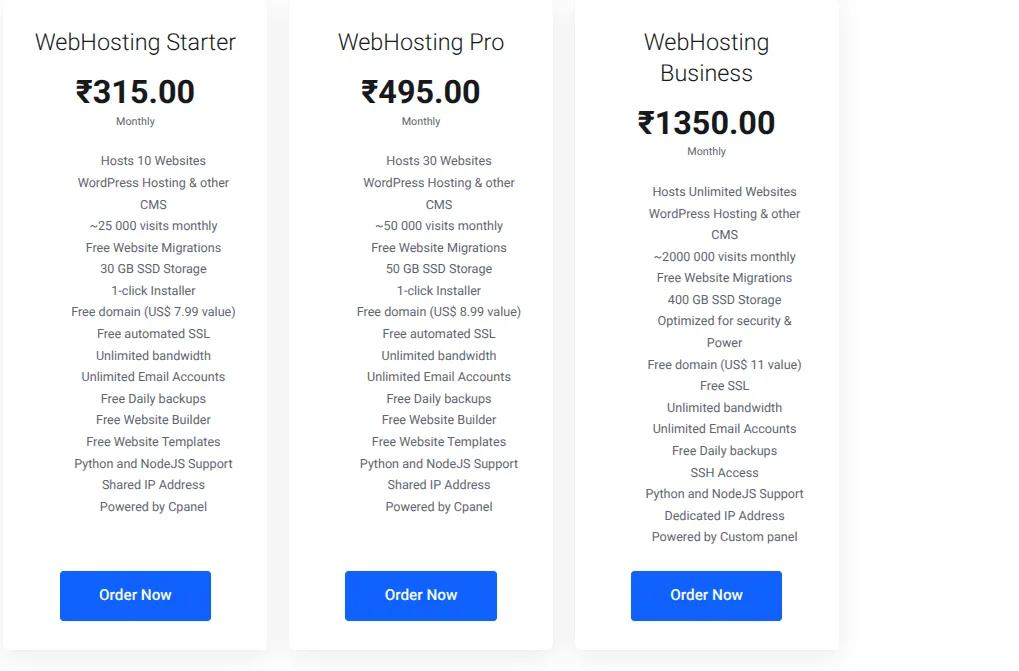
- Build a professional online presence: A proper website builds trust, improves Google discoverability, and gives you a place to collect payments and leads. Truehost’s Web Hosting plans get you live fast without needing to be a tech expert.
- Set up a business email: A branded email like
[email protected]signals professionalism. - Open a separate business bank account: Mixing personal and business finances is the fastest way to create chaos at tax time.
- Be consistent for 90 days: Most businesses fail not because the idea was bad, but because the founder gave up too early. Commit to 90 days of consistent action before evaluating results.
The Best Time Is Now
There is never a perfect moment to start a business. The economy will always be uncertain.
Life will always be too busy. Waiting for the right conditions is the surest path to never starting at all.
What you have in front of you right now, in 2026 India, is a genuine once-in-a-generation window.
Digital infrastructure, consumer willingness to spend online, government support for small businesses, and a growing entrepreneurial community all line up in your favour.
Pick one idea that speaks to your passion or your existing skills. Take one small, concrete step today.
And when you are ready to stake your claim online, start with reliable, affordable hosting from Truehost, and build your business on a foundation you can trust.