 Web HostingBudget-friendly shared hosting plans
 Domains SearchFrom .com to unique country domains, explore and register extensions worldwide.
 WordPress HostingPower your blog or business with WordPress hosting.
 Email HostingSimple, secure email hosting that helps you stay connected and professional.
 Reseller HostingStart your own hosting business with easy and reliable reseller hosting plans.
 AffiliateJoin our affiliate program and earn commissions every time you bring in new customers.
 cPanel HostingHosting powered by cPanel, the world’s most user-friendly control panel.
 Windows HostingBuilt for Windows applications and websites
 IN Domain PricesDon’t miss out on the best domain deals in India!
 WHOIS LookupFind out who owns a domain name with a quick and easy WHOIS search.
 Domain TransferTransfer your domain to us and enjoy reliable support every step of the way.
 .Com DomainGet the most trusted domain for worldwide credibility
 All TldsSearch and register domain extensions worldwide.
 SSL CertificatesProtect your website with trusted SSL certificates and keep customer data safe.
 VPS HostingPowerful virtual servers. Full root access. Reliable uptime.
 Managed VPS HostingNot a tech expert? Choose our fully managed VPS service.
 Dedicated ServersTake full power and total control of your own physical server.
 AI Website BuilderCreate stunning websites instantly with our easy AI builder.
 Online ShopBuild your eCommerce store easily, no coding, just growth.
 Web Design ServicesGet a website built for your brand and designed for your goals.
 Contact UsReach out to us for support or questions.
 SupportGet answers and how-to guides for all our services.
 BlogRead our latest blogs on web hosting, online business, digital marketing, and other helpful topics.
Every brand needs a reliable home online.
Experts say that the hosting plan you choose can make or break your brand.
But as soon as you look into hosting options, you wonder: Which one is right for me?
Shared Hosting and VPS Hosting are two of the most common web hosting options in India.
Though they may seem similar at first, they are very different.
Understanding these differences will help you choose the right foundation for your brand.
This guide explains both options clearly to help you determine what’s best for you.
What is Shared Hosting?

Shared hosting is a type of web hosting where multiple websites are stored on a single physical server.
The hosting company manages the server, and the websites share the available resources.
These resources include processing power (CPU), memory (RAM), storage, and bandwidth
To understand this better, consider businesses storing their inventory in a shared warehouse.
Each business has its designated section, but the overall space, utilities, and infrastructure are shared.
If one business suddenly expands its inventory or uses more warehouse equipment than expected, it can temporarily reduce space and efficiency for others.
Who is Shared Hosting for?
Shared hosting is ideal for brands that are just starting their online journey.
It works best for:
- Small businesses launching their first website
- Personal brands and freelancers
- Portfolio websites
- Blogs and informational websites
- Local service providers targeting a small audience
- Startups testing an idea before scaling
What is VPS Hosting?

VPS hosting is a more powerful and flexible hosting solution. In this setup, a physical server is divided into several virtual servers.
Each virtual server operates independently, with its own allocated resources.
Think of VPS hosting as having your own storage unit inside a larger warehouse facility.
You are still located within the same building as other businesses, but your storage unit is completely separate and locked.
Who is VPS Hosting for?
VPS hosting is designed for brands that need more power, reliability, and customization.
It is suitable for:
- Growing e-commerce stores
- Businesses running multiple websites
- SaaS startups
- Agencies hosting client websites
- High-traffic blogs
- Businesses running custom applications
- Brands expecting seasonal traffic spikes
You can learn more about VPS hosting in our recent guide.
Shared Hosting vs VPS Hosting: Key Differences
| Feature | Shared Hosting | VPS hosting |
| Cost | Lower | Moderate |
| Resource Allocation | Shared among users | Dedicated allocation |
| Performance | Slower and can fluctuate | Faster and more stable |
| Security | Basic | Enhanced |
| Customization | Limited | Extensive |
| Scalability | Limited | More flexible |
| Technical Knowledge | Little to none | Requires some or a lot depending on the selected plan |
| Best For | Small or new websites | Growing or high-traffic brands |
1) Performance
Performance is one of the biggest differences.
With shared hosting, if one website experiences a traffic spike, it can affect the performance of others on the same server.
A slow website increases bounce rates, reduces user trust, and can directly impact sales.
VPS hosting avoids this issue by allocating dedicated resources. Even if another VPS on the same server experiences heavy traffic, your performance remains unaffected.
2) Cost
Shared hosting is the most affordable hosting solution because server costs are distributed among many users.
VPS hosting costs more because you are paying for dedicated resources and better performance.
For revenue-generating websites, the investment can quickly pay off through improved user experience and conversions.
3) Security
Security is critical for any brand, especially those handling customer data.
In shared hosting, all websites operate within the same server environment. While hosting providers implement security measures, vulnerabilities in one website can potentially affect others.
In VPS hosting, isolation significantly reduces this risk. Each virtual server is separated, making it harder for security breaches to spread.
You also have more control over firewalls and security configurations with VPS, enabling you to add extra layers of protection.
4) Control and Customization
Shared hosting has limited control.
You can’t make deep server-level changes, install custom server software, or modify advanced settings.
VPS hosting gives you much more flexibility.
You can configure the server environment to match your specific business needs, install custom applications, and optimize performance.
5) Scalability
Every growing brand eventually needs more resources.
With shared hosting, scaling options are limited. You may need to migrate to higher plans frequently or switch to VPS entirely when resource limits are reached.
VPS hosting allows for smoother scaling. You can upgrade RAM, CPU, or storage as needed without major disruptions.
6) Server administration
Shared hosting is built for simplicity.
You use a control panel to manage your website. The hosting provider takes care of backend operations like:
- Managing the server environment
- Handling updates
- Maintaining security patches
- Optimizing performance
VPS hosting requires more technical expertise. You may need to configure the server, manage updates, and handle security settings yourself.
However, many hosting providers offer managed VPS plans.
With managed VPS, the hosting provider takes care of the technical backend operations. This makes it easier for you to enjoy VPS benefits without great technical skills.
What to Consider when Choosing between Shared Hosting and VPS Hosting

The decision between shared and VPS hosting depends on a few factors related to your brand.
a) Traffic expectations
If your website is new and you expect low visitor numbers, shared hosting will likely handle your needs comfortably.
However, if you anticipate steady growth or marketing campaigns that drive traffic spikes, VPS hosting provides more reliability.
b) Purpose of your website
A personal blog or simple business website typically performs well on shared hosting.
On the other hand, an e-commerce store handling customer transactions benefits from the performance stability and security of VPS hosting.
c) Budget
Shared hosting minimizes upfront costs, making it accessible for startups.
VPS requires a higher investment but can prevent performance or security-related losses for revenue-driven websites.
d) Technical comfort level
If you prefer minimal involvement in server management, shared hosting offers simplicity.
While managed VPS hosting providers offer management solutions, unmanaged versions require significant technical knowledge.
e) Long-term plans
You should also consider future expansion.
Many businesses start with shared hosting, but quickly outgrow it once traffic increases.
If you anticipate rapid growth, starting with VPS may prevent future migration challenges.
Truehost India: Flexible Hosting for Your Brand
So, you’ve understood the differences between shared hosting and VPS hosting.
You’ve also decided which one is best for you.
The next step is choosing a hosting provider.
At Truehost, we offer both shared hosting and VPS hosting, enabling you to start and scale smoothly.
Truehost Shared Hosting
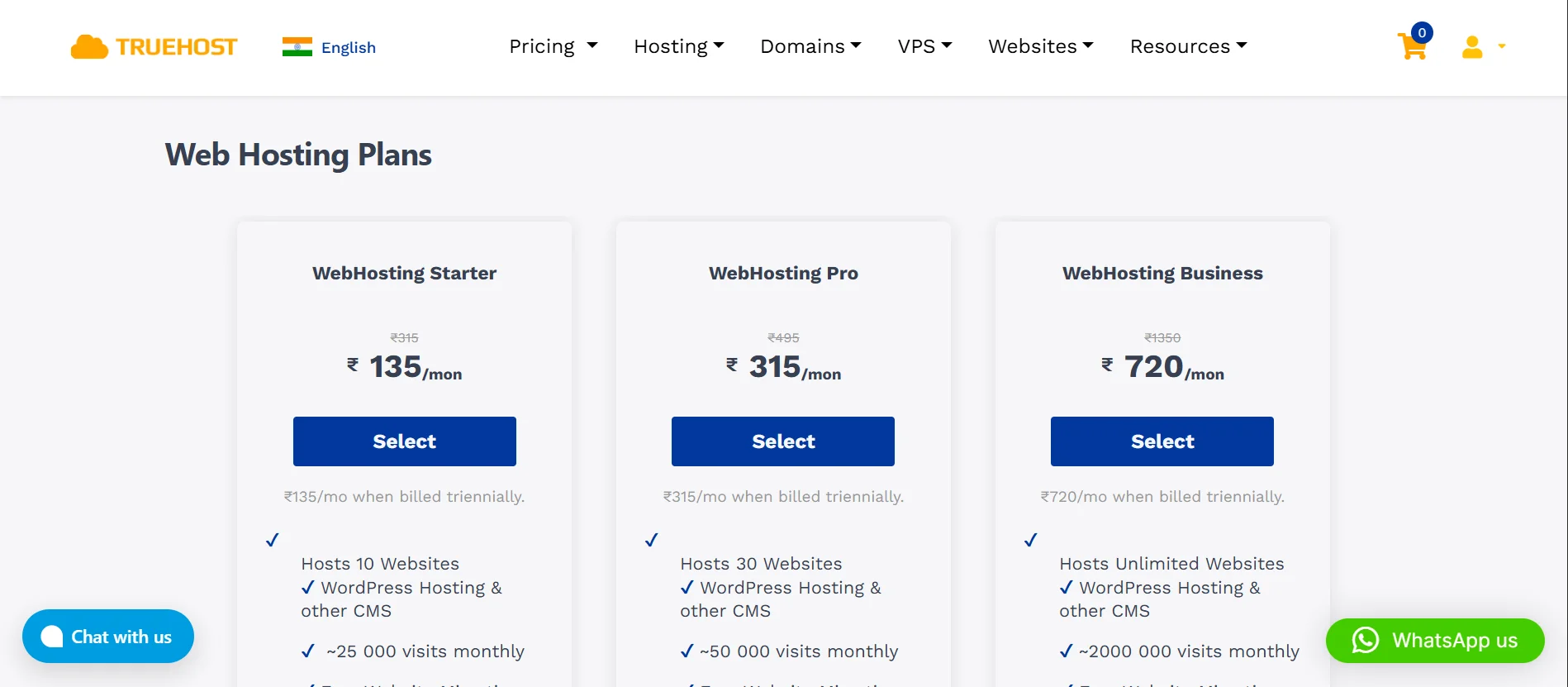
Our shared hosting plans are designed with ease of use and affordability in mind.
We currently offer shared hosting in three tiers:
a) WebHosting Starter
The Starter plan is best suited for new websites and small projects.
It allows you to host 10 websites under one account while giving you enough SSD storage and bandwidth to handle early-stage traffic (around 25,000 visits monthly).
b) WebHosting Pro
The Pro plan is built for growing websites that need more space and capacity.
It supports more websites (30) and higher traffic volumes (around 50,000 visits monthly).
c) WebHosting Business
The Business plan is our most powerful shared hosting option.
It’s suitable for brands handling larger traffic volumes, allowing for unlimited websites with around 2,000,000 visitors per month.
This tier also offers much more storage and performance capacity, making it a strong option before transitioning to VPS hosting.
Extra Perks with Truehost Shared Hosting
Beyond the core plan distinctions, Truehost ensures all shared hosting customers benefit from a set of value-added features.
These include:
- Free automated SSL certificates
- Unlimited emails
- 24/7 support from Truehost’s expert team
- Free daily backups
- Free website builder
Interested? Click here to learn more about Truehost India’s shared hosting plans.
Truehost India VPS Hosting

While shared hosting is often enough for some websites, you may outgrow it as your traffic and technical needs increase.
For this, Truehost’s VPS hosting would be the way to go.
We offer both managed and unmanaged VPS hosting, letting you choose between hands-off administration or full control over your server environment.
Managed VPS Hosting
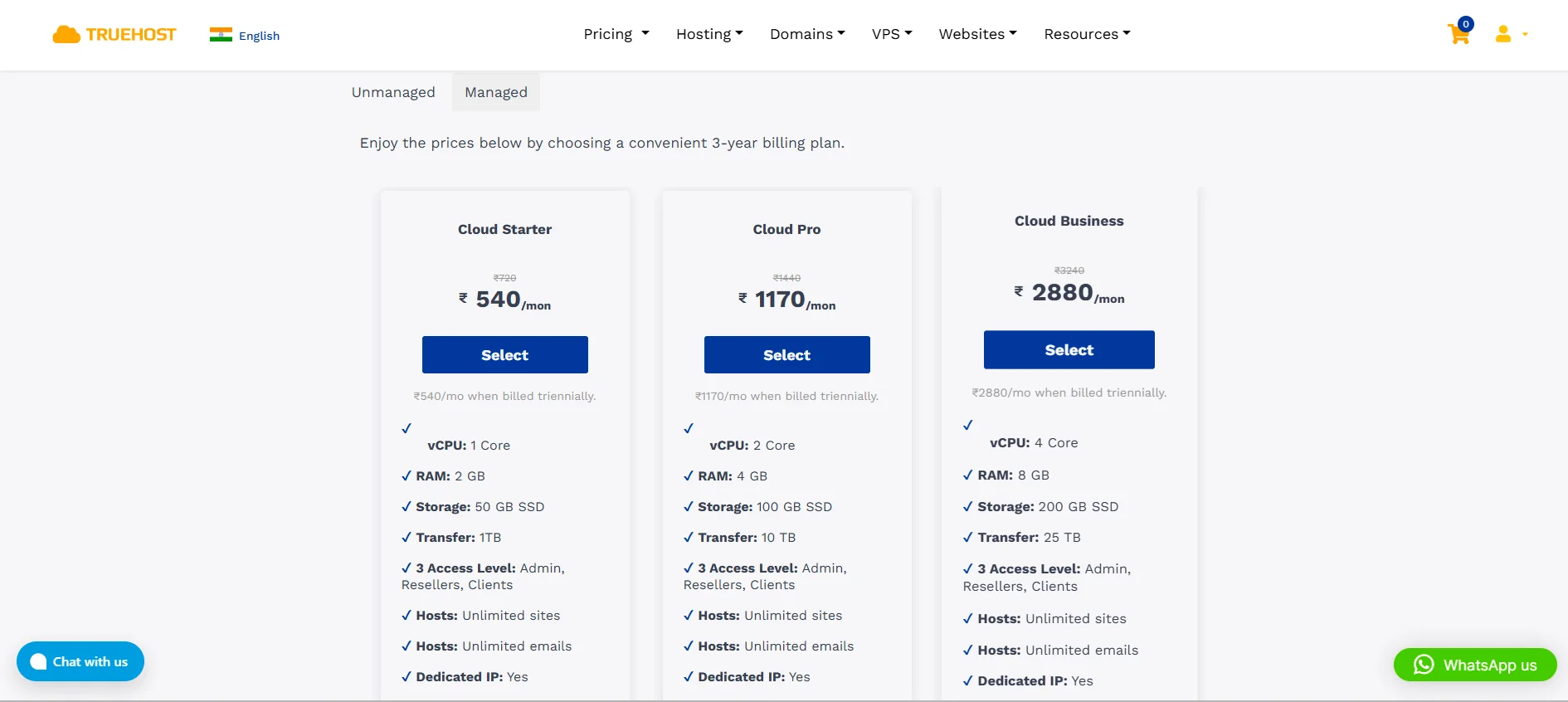
With a managed plan, we will take care of important backend work, such as:
- Operating system and software updates
- 24/7 security monitoring
- Regular backups
- Performance optimization
Our managed VPS plans are structured to support businesses at various stages.
Cloud Starter is the entry managed tier, Cloud Pro steps up the game, and Cloud Business caters to larger operations.
Learn more here.
Unmanaged VPS Hosting
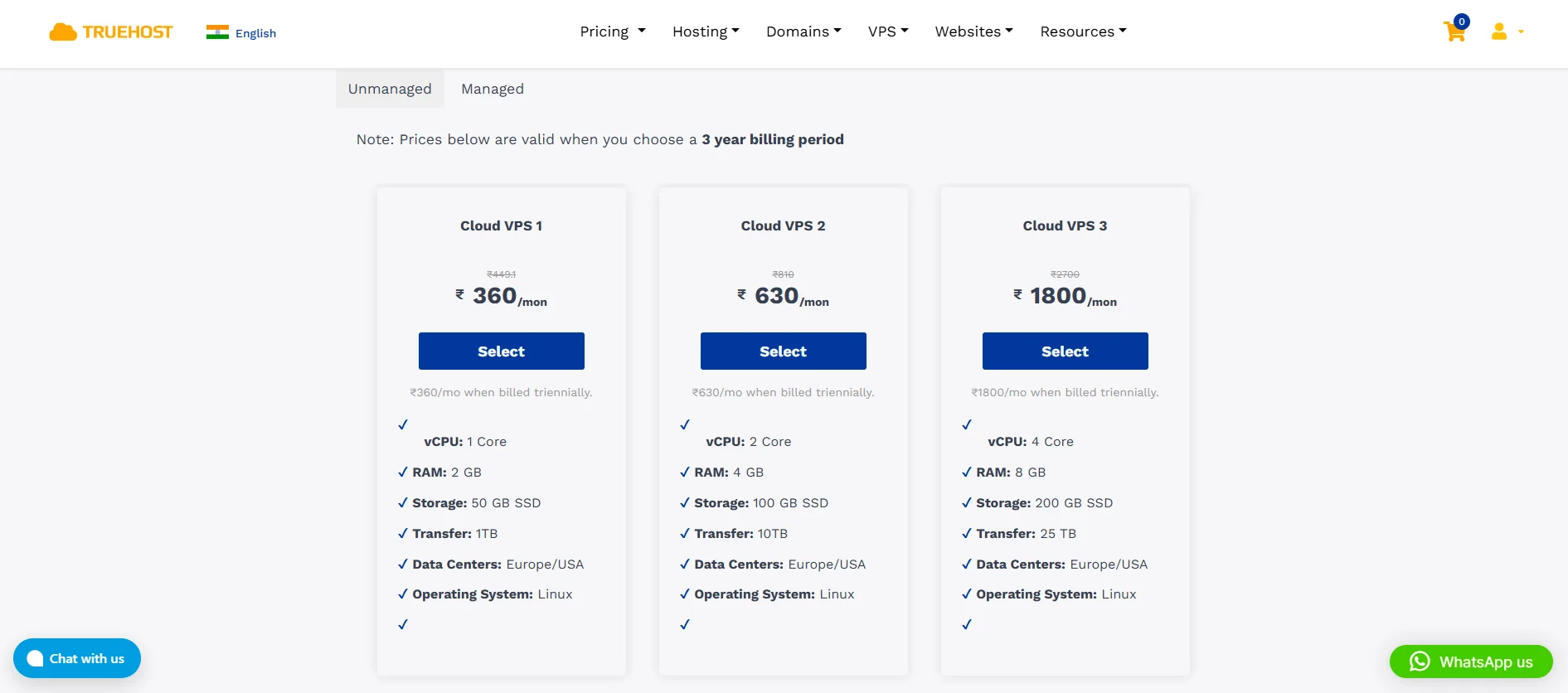
If you have technical expertise or a dedicated tech team, our unmanaged VPS hosting will give you the control you want.
The unmanaged VPS offerings follow a similar tiered structure. They start with basic resource levels and go up to plans with multiple cores, more RAM, and larger SSD storage.
You can learn more here.
Conclusion
Shared hosting and VPS hosting serve different purposes. The right choice depends on your brand’s size, goals, traffic expectations, and budget.
Shared hosting offers a cost-effective and beginner-friendly starting point.
VPS hosting delivers greater performance stability, control, and scalability for growing brands.
If you are launching a new website with little traffic, shared hosting is often sufficient.
If your brand is growing or relies heavily on performance and reliability, VPS hosting provides stronger long-term value.
With a provider like Truehost offering both options, you can choose the solution that fits your brand today while keeping the flexibility to scale tomorrow.
To learn more about Truehost’s offerings, visit our main page.