 Web HostingBudget-friendly shared hosting plans
 Domains SearchFrom .com to unique country domains, explore and register extensions worldwide.
 WordPress HostingPower your blog or business with WordPress hosting.
 Email HostingSimple, secure email hosting that helps you stay connected and professional.
 Reseller HostingStart your own hosting business with easy and reliable reseller hosting plans.
 AffiliateJoin our affiliate program and earn commissions every time you bring in new customers.
 cPanel HostingHosting powered by cPanel, the world’s most user-friendly control panel.
 Windows HostingBuilt for Windows applications and websites
 IN Domain PricesDon’t miss out on the best domain deals in India!
 WHOIS LookupFind out who owns a domain name with a quick and easy WHOIS search.
 Domain TransferTransfer your domain to us and enjoy reliable support every step of the way.
 .Com DomainGet the most trusted domain for worldwide credibility
 All TldsSearch and register domain extensions worldwide.
 SSL CertificatesProtect your website with trusted SSL certificates and keep customer data safe.
 VPS HostingPowerful virtual servers. Full root access. Reliable uptime.
 Managed VPS HostingNot a tech expert? Choose our fully managed VPS service.
 Dedicated ServersTake full power and total control of your own physical server.
 AI Website BuilderCreate stunning websites instantly with our easy AI builder.
 Online ShopBuild your eCommerce store easily, no coding, just growth.
 Web Design ServicesGet a website built for your brand and designed for your goals.
 Contact UsReach out to us for support or questions.
 SupportGet answers and how-to guides for all our services.
 BlogRead our latest blogs on web hosting, online business, digital marketing, and other helpful topics.
If you’ve created a website for your business, chances are you’ve asked yourself why people from your local area aren’t finding you online.
You might have a great product. You might offer excellent service. But if your business isn’t showing up on Google searches, you’re missing out on people ready to buy.
This is why local SEO is important.
In this guide, you’ll learn exactly what local SEO is, why it matters, and how you can use it to rank your business on Google.
What Is Local SEO?
Local SEO (Search Engine Optimization) is the process of optimizing your online presence so your business appears in search results when people nearby look for what you offer.
Think about the last time you searched for something like:
- “Best plumber near me”
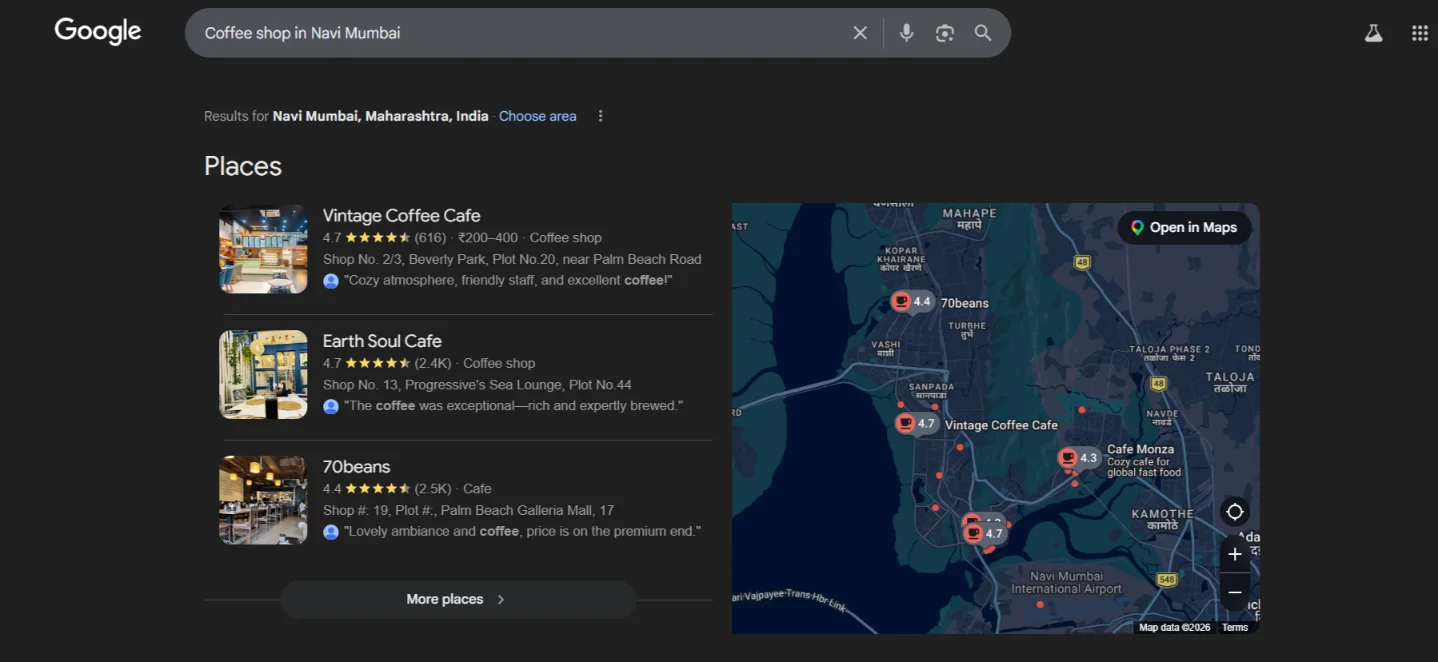
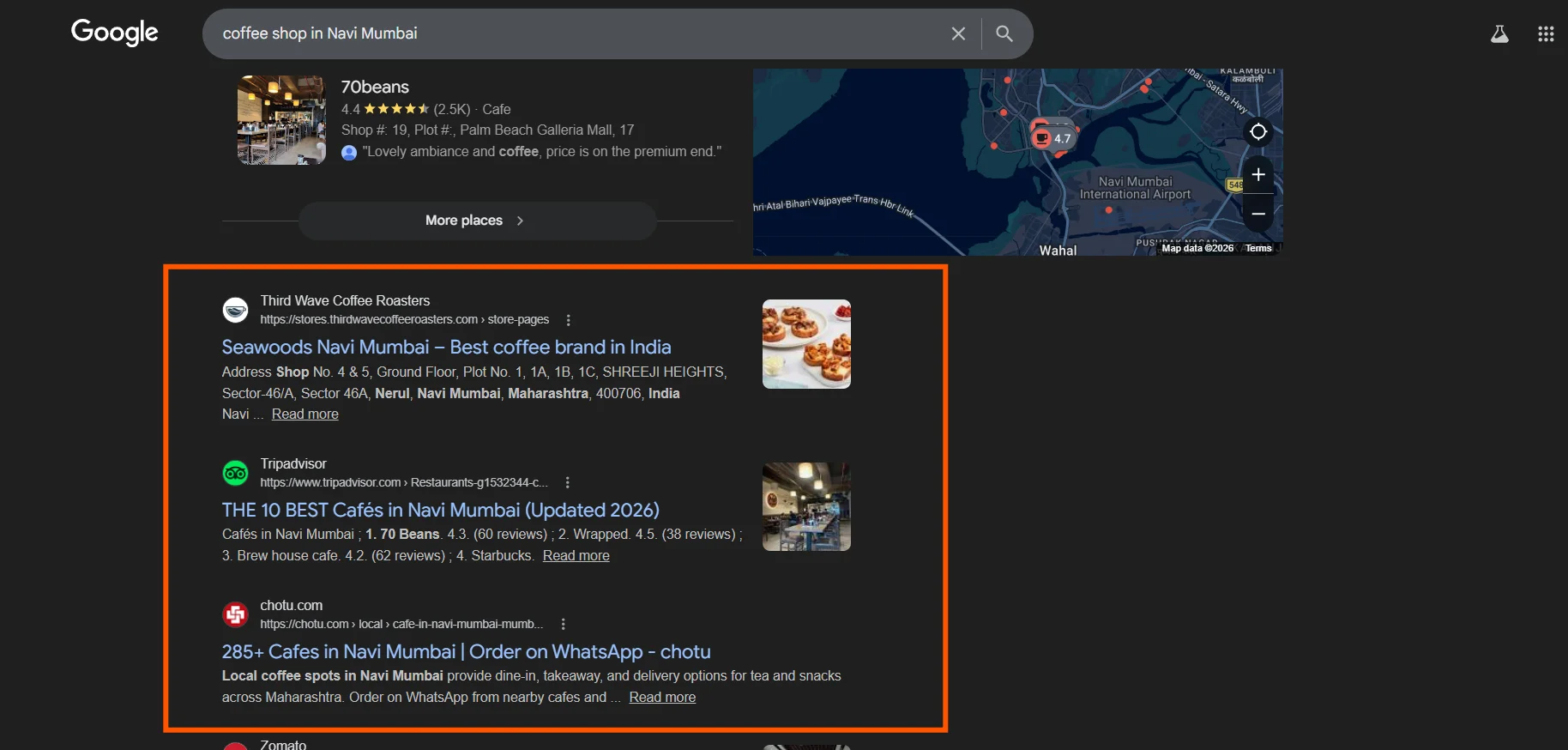
- “Coffee shop in Navi Mumbai”
- “Dentist open on Saturday”
Google didn’t show you results from across the world. It showed businesses close to where you were searching from.
Local SEO influences how you appear in:
- Google’s Local Pack – The map and three business listings that appear at the top of local search results.
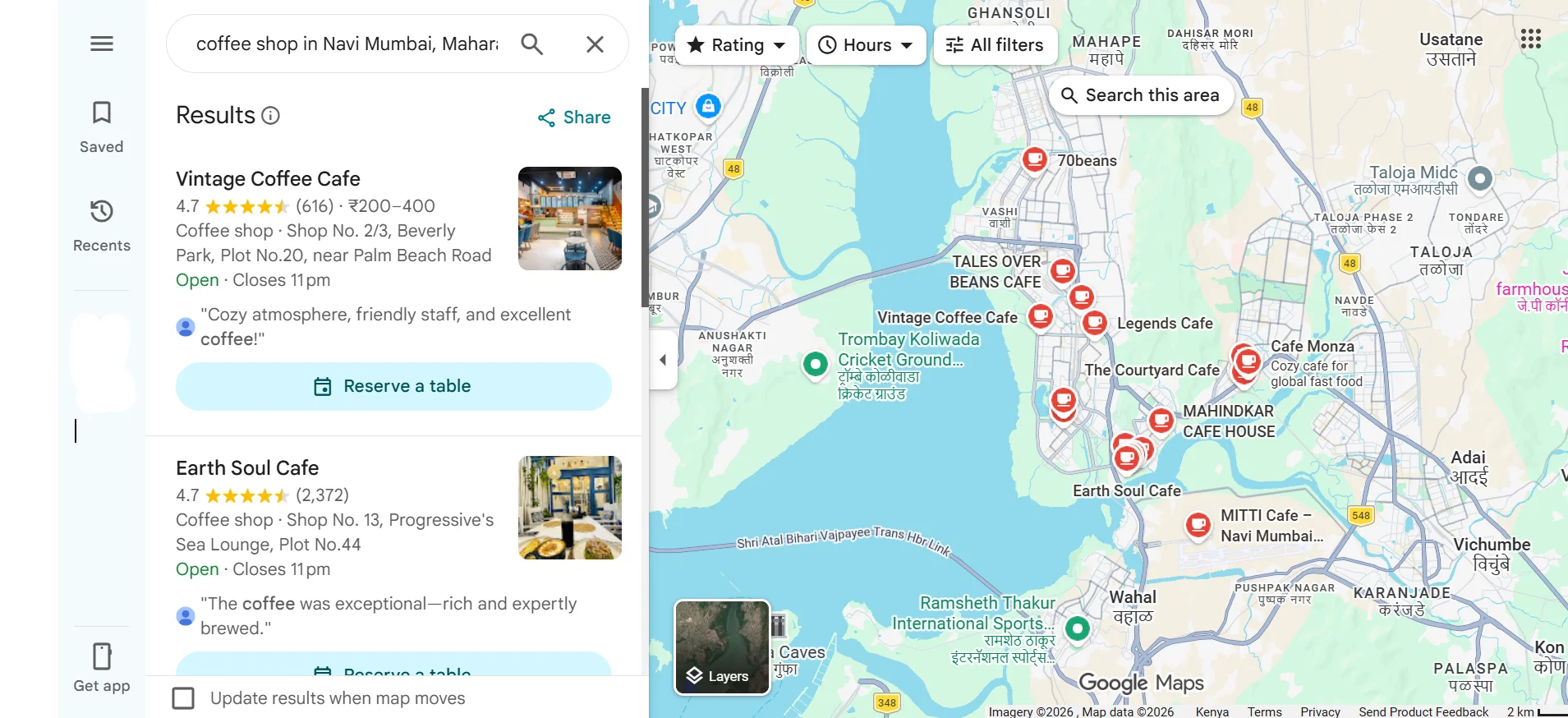
- Google Maps – when someone searches directly on Maps
- Organic search results – the regular blue-link results below the map pack
Why Is Local SEO Important?
If you run a local business, local SEO isn’t just a nice-to-have; it’s essential.
Here’s why:
a) People search locally before buying – Studies consistently show that the majority of consumers search online before visiting a local business. If you’re not showing up, you’re missing potential clients.
b) High purchase intent – Local searches convert fast. Someone searching “electrician near me” isn’t browsing casually; they actually need one. Local SEO puts you in front of buyers at the exact moment they’re ready to act.
c) Mobile search is booming – Most local searches happen on smartphones. Google prioritizes businesses that are optimized for local, mobile users.
d) It levels the playing field – A well-optimized small business can outrank a large national chain in local results. Local SEO rewards relevance and proximity over budget.
e) Free visibility – Unlike paid ads, organic Local SEO doesn’t cost you per click. Once you’re ranking, that visibility is essentially free traffic.
f) Trust and credibility – Appearing in Google’s Local Pack with good reviews signals to potential customers that you’re a legitimate, trustworthy business.
Key Components of Local SEO
Local SEO is made up of several important elements. Each one plays a role in helping your business rank higher in local search results.
Google Business Profile (GBP)
Your Google Business Profile is one of the most important parts of local SEO.
It is essentially what appears when people search for your business or related services on Google.
It includes your business name, location, hours, reviews, and more.
To optimize your profile:
- Claim and verify your listing
- Use your correct business name
- Add accurate contact details
- Choose the right business category
- Upload high-quality photos
- Write a clear business description
- Keep your opening hours updated
A well-optimized profile increases your chances of appearing in the local pack and Google Maps results.
NAP Consistency
NAP stands for Name, Address, and Phone number.
These details must be consistent across all online platforms. That includes your website, directories, and social media profiles.
If your business name is written differently in different places, or if your phone number varies, it can confuse search engines.
Consistency helps Google trust your business information. And trust improves your rankings.
Make sure your NAP details are:
- Accurate
- Identical everywhere
- Updated whenever they change
Online Reviews and Ratings
Reviews are one of the most powerful ranking signals in Local SEO. They are also one of the most powerful conversion tools.
Google looks at:
- The quantity of your reviews
- The quality (average star rating)
- The recency of reviews
- Whether you respond to reviews
How to build reviews ethically:
- Ask happy customers directly, in person or via follow-up email/SMS
- Make it easy by sharing a direct link to your Google review page
- Never buy fake reviews. Google can detect and penalize this
- Respond to every review professionally (positive or negative)
- Provide helpful responses
Local Citations
A local citation is any online mention of your business’s NAP information.
These mentions usually appear in business directories, review sites, local listings, etc.
Citations matter because they reinforce to Google that your business exists and is active.
The more consistent, high-quality citations you have, the more trust Google places in your business.
Use tools like Moz Local, BrightLocal, or Yext to manage and audit your citations across the web.
Localized On-Page SEO
Your website needs to be optimized for local search. This is on-page SEO with a local focus.
To do this:
- Include your city and region in page titles, meta descriptions, and headings. Instead of “Plumbing services” you would use “Best plumbing services in Bengaluru”
- Create a dedicated Contact page with your full NAP and an embedded Google Map.
- If you serve multiple areas, create separate location pages for each.
- Add LocalBusiness schema markup to your website. This is structured data that helps Google understand your business details.
- Ensure your website loads fast and is mobile-friendly.
Local Link Building
Links from other websites to yours (backlinks) remain a major ranking factor.
For Local SEO, the focus is on getting links from locally relevant sources.
A link from a respected local website tells Google you’re an established part of the local community.
Effective local link-building strategies:
- Get listed on your local chamber of commerce website if possible
- Sponsor local events, charities, or sports teams (they often link back to sponsors)
- Partner with complementary local businesses for cross-promotion
- Get featured in local news outlets or blogs
- Submit guest posts to local industry blogs or community websites
Local Content Creation
Creating content that speaks directly to your local audience helps attract both users and search engines.
Some ideas for local content:
- Blog posts answering common questions your local customers ask
- Guides to local events, neighborhoods, or resources related to your industry
- Case studies featuring local clients (with their permission)
- News or updates about your business’s involvement in the community
- “Best of” lists featuring local spots alongside your business
When your content consistently references your location and serves local intent, Google becomes more confident in ranking you for local searches.
Proximity and Relevance Signaling
Google uses three main factors to determine local rankings:
- Relevance – How well your business matches what someone searched for
- Distance – How close your business is to the searcher
- Prominence – How well-known and trusted your business is online
You can’t control distance (though choosing a well-located address helps). But you can significantly impact relevance and prominence through all the strategies above.
To strengthen relevance signals:
- Use precise business categories on your GBP
- Include your services clearly on your website and GBP
- Use location-specific keywords naturally throughout your website and content
To strengthen prominence:
- Build reviews, citations, and backlinks consistently over time
- Stay active on your GBP with posts and updates
- Maintain a well-optimized, trustworthy website
Mistakes To Avoid When Doing Local SEO
There are a number of mistakes people make when doing local SEO. Avoiding them can save you time and unnecessary headaches.
These include:
a) Incomplete or unclaimed GBP listing – Leaving your profile unverified or half-filled is one of the biggest missed opportunities.
b) Inconsistent NAP information – Different names, addresses, or phone numbers across the web confuse Google.
c) Ignoring reviews – Not responding to reviews (especially negative ones) damages both rankings and reputation.
d) Keyword stuffing – Forcing location keywords unnaturally into your content looks spammy and can hurt rankings.
e) Duplicate listings – Multiple GBP listings for the same location confuse Google and split your ranking power. Merge or remove duplicates.
f) No mobile optimization – A website that doesn’t work well on phones is a dealbreaker for both users and Google.
g) Set-and-forget mentality – Local SEO isn’t a one-time task. It requires ongoing updates, fresh content, and consistent review management.
h) Buying fake reviews – This violates Google’s policies and can get your listing suspended.
How Can Truehost Help?
Local SEO takes time, expertise, and consistency. If you’d rather focus on running your business while experts handle your rankings, Truehost has you covered.
Truehost offers dedicated Local SEO Plans designed to get your business ranking on Google without you having to figure it all out yourself.
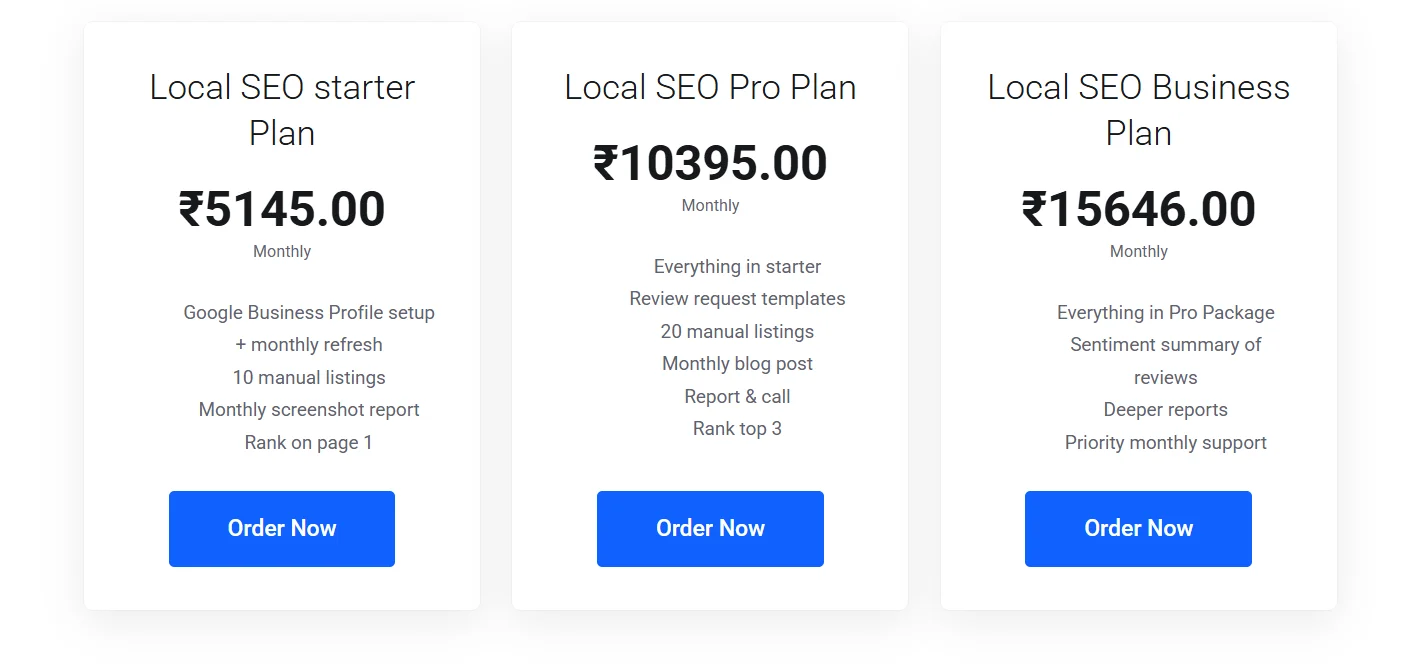
With us, you can get:
- Professional GBP optimization – your listing fully set up and tuned for rankings
- Citation building and cleanup – consistent NAP across all key directories
- On-page SEO – your website optimized for local search
- Review strategy support – guidance on building a strong review profile
- Regular reporting – so you always know how your rankings are improving
It doesn’t matter if you’re just getting started with Local SEO or you’ve been struggling to gain traction; our team has the tools and experience to move the needle.
Explore our Local SEO Plans here and put your business on the map, literally.