 Web HostingBudget-friendly shared hosting plans
 Domains SearchFrom .com to unique country domains, explore and register extensions worldwide.
 WordPress HostingPower your blog or business with WordPress hosting.
 Email HostingSimple, secure email hosting that helps you stay connected and professional.
 Reseller HostingStart your own hosting business with easy and reliable reseller hosting plans.
 AffiliateJoin our affiliate program and earn commissions every time you bring in new customers.
 cPanel HostingHosting powered by cPanel, the world’s most user-friendly control panel.
 Windows HostingBuilt for Windows applications and websites
 IN Domain PricesDon’t miss out on the best domain deals in India!
 WHOIS LookupFind out who owns a domain name with a quick and easy WHOIS search.
 Domain TransferTransfer your domain to us and enjoy reliable support every step of the way.
 .Com DomainGet the most trusted domain for worldwide credibility
 All TldsSearch and register domain extensions worldwide.
 SSL CertificatesProtect your website with trusted SSL certificates and keep customer data safe.
 VPS HostingPowerful virtual servers. Full root access. Reliable uptime.
 Managed VPS HostingNot a tech expert? Choose our fully managed VPS service.
 Dedicated ServersTake full power and total control of your own physical server.
 AI Website BuilderCreate stunning websites instantly with our easy AI builder.
 Online ShopBuild your eCommerce store easily, no coding, just growth.
 Web Design ServicesGet a website built for your brand and designed for your goals.
 Contact UsReach out to us for support or questions.
 SupportGet answers and how-to guides for all our services.
 BlogRead our latest blogs on web hosting, online business, digital marketing, and other helpful topics.
If you’re building a website in India today, you’ll eventually face one confusing question:
Is, free SSL certificate enough for your website, or do you need to buy a paid SSL certificate?
At first, both look the same.
Both give you the HTTPS padlock. Both encrypt the connection. Both stop browsers from showing “Not Secure” warnings.
So why do companies pay thousands of rupees for SSL when a free option exists?
Here’s the simple truth.
Free SSL is perfect for some websites. Paid SSL is necessary for others. And choosing the wrong one can hurt your credibility, your SEO, or even your business.
In this guide, I’ll break everything down to ensure you understand the difference between free vs paid SSL certificates, including the pros and cons of each one.
Let’s get started.
What Is a Free SSL Certificate?
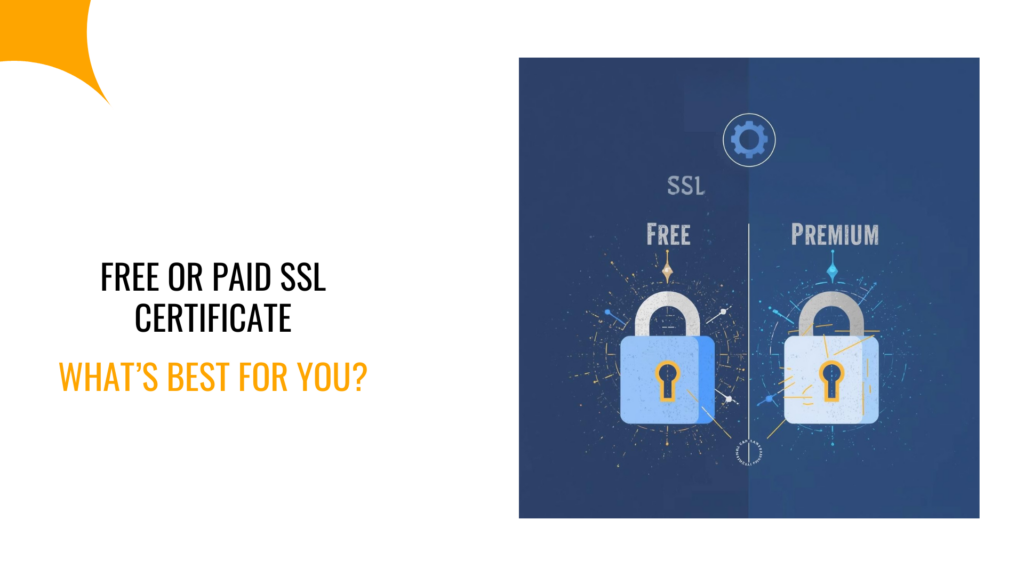
A free SSL certificate is the simplest way to get your site on HTTPS without paying a single rupee for it.
Most hosting companies in India, including Truehost, offer it through Let’s Encrypt. And if you’re launching your first website, it feels like a win.
You click a button, activate it, and instantly remove the “Not Secure” browser warning.
Here’s what you get:
- Basic encryption
- HTTPS
- Padlock icon
- No security warnings on Chrome or Safari
For blogs, student projects, and small informational sites, this is usually enough.
But before you settle for it, keep one thing in mind.
Free SSL comes with limitations that can become annoying once your traffic grows or you start handling sensitive user data.
What Are the Advantages of a Free SSL Certificate Over a Paid SSL?
When you’re just starting a website in India, free SSL certificates have some clear perks.
They’re simple, fast, and don’t cost a rupee.
But it’s also important to understand how these benefits stack up against paid SSL certificates.
Here’s how:
| Free SSL Certificate | Paid SSL Certificate |
| Costs zero indian rupees | Costs money with yearly paid plans |
| Easy to install | More complex setup |
| Good for basic websites, such as small blogs and personal sites | Overkill for small sites |
| Ideal for short-term projects | Not ideal for temporary sites because they last longer than needed |
| Auto-renews every 90 days | Requires tracking expiration dates and renewing in time |
So, even though paid SSL certificates offer more security and trust, the advantages of free SSL make it the ideal choice for beginners, personal projects, or small websites that don’t handle sensitive data.
What Are the Disadvantages of a Free SSL Certificate Over a Paid SSL?
Free SSL certificates are great for small sites and beginners.
But they aren’t always enough, especially if your business’s website or app needs trust, reliability, or long-term protection.
Here’s why:
| Free SSL Certificate | Paid SSL Certificate |
| No business verification, so users can’t confirm your company’s identity | Verifies your business, boosting trust |
| Short validity, usually 90 days | Lasts up to 1 year or more |
| No warranty, and hence no financial protection if something goes wrong | Comes with a warranty for added security |
| Not suitable for high-risk sites like banks, marketplaces, and Indian SMEs | Trusted for eCommerce, payment processing, and sensitive data |
| Limited support | Dedicated support and guidance from your host |
In summary, free SSL is perfect for small blogs, personal projects, and testing ideas.
But if your site handles payments, customer data, or represents your business online, a paid SSL is the safer, smarter choice.
What Is a Paid SSL Certificate?
A paid SSL certificate is a premium security solution you buy from a trusted Certificate Authority (CA).
It’s more than just encryption, as it adds trust, verification, and extra protection for your website.
That said, paid SSL comes in three main types:
- DV SSL (Domain Validation): Basic validation, quick setup, good for small businesses or blogs that want extra trust.
- OV SSL (Organization Validation): Verifies your business details, ideal for Indian SMEs, eCommerce, and service websites.
- EV SSL (Extended Validation): Highest level of trust and verification, often used by banks, marketplaces, and larger Indian companies.
If your website handles payments, collects user data, or manages bookings in India, paid SSL is almost always the recommended choice.
It protects your visitors, your business reputation, and ensures browsers trust your site.
What Are the Advantages of Paid SSL Certificates Compared to Free SSL?
Paid SSL certificates are more than just encryption. They boost trust, reliability, and long-term protection.
And in India, where online scams are common, this extra trust can make a huge difference for businesses.
Here’s how paid SSL stands out compared to free SSL:
| Paid SSL Certificate | Free SSL Certificate |
| Strong identity verification that confirms your business details and boosts credibility | No verification, so users can’t confirm your business identity |
| High trust signals where EV SSL shows company info in the certificate | Basic trust only, as it shows a padlock only without company info |
| Long validity of one year or more | Short validity of 90 days |
| Better browser compatibility since it’s trusted by all browsers and devices | Good, but minor browser issues may occur |
| Dedicated support with real assistance if installation or issues arise | Limited support |
| Ideal for business websites that deal with payments, logins, and sensitive data | More suitable for personal or small sites |
Paid SSL certificates give your Indian business credibility, ensure trust for customers, and reduce potential security risks.
So, while free SSL is fine for personal projects, if you’re running a website that collects payments or customer information, paid SSL is the smarter, safer choice.
What Are the Disadvantages of Paid SSL Certificates Compared to Free SSL?
Paid SSL certificates offer strong security and trust, but they’ve downsides you cannot ignore.
In fact, for some websites in India, these limitations may make free SSL a better fit.
Here’s how:
| Paid SSL Certificate | Free SSL Certificate |
| Requires annual payment, not ideal for personal blogs or student projects | Free of cost, thus perfect for beginners and small sites without a budget |
| Requires validation | No validation needed |
| Installation takes longer | Quick, one-click installation |
| Extra features are unnecessary for hobby or temporary projects | Simple and sufficient for small websites |
So, while paid SSL is essential for Indian businesses handling payments or sensitive data, free SSL can still be a smart, zero-cost option for personal projects or small sites.
Free vs Paid SSL Certificate: Comparison Table
Figuring out whether to go for a free or paid SSL certificate is not as easy as many people assume.
I’ve seen many website owners in India scratch their heads over this. Maybe you may be saying, after all, both give you the padlock and HTTPS.
But the real difference is more than removing the “not secure” warning on browns. Also, other factors such as trust, reliability, and how your visitors see your site count.
Here’s a quick comparison to make the choice clearer:
| Feature | Free SSL | Paid SSL |
| Cost | ₹0 | ₹500–₹25,000/year (India) |
| Validation | Domain only | DV, OV, EV |
| Warranty | None | Included |
| Ideal For | Small blogs and personal sites | Big businesses and e-commerce sites |
| Trust Level | Basic | High |
| Renewal | 90 days | Up to 1 year |
| Support | Limited | Full support |
| Security Level | Strong encryption | Strong plus extra security features |
| Browser Trust | Good | Excellent |
| Business Identity | Not verified | Fully verified |
Still wondering what’s the difference between a free SSL and a paid SSL Certificate?
Here’s the simplest way to understand it.
Free SSL handles encryption, while paid SSL handles encryption, trust, identity, and protection.
So, if you only want the padlock, free SSL works. But if you want trust, especially from Indian customers, paid SSL is the better choice.
Final Thoughts
Choosing between free and paid SSL comes down to your website goals.
For instance, if you’re running a small website, blog, or student project in India, a free SSL certificate is perfect.
But if you’re running a business, taking payments, or handling customer information, then paid SSL is the smarter, safer choice.
It builds trust. It protects your reputation. And it gives visitors confidence that your website is real and secure.
The good news is that, if you want an affordable, fast, and reliable option, you can get both free and premium SSL certificates directly from Truehost.
Ready to secure your website? Explore these offers on paid SSL and upgrade your website security without overspending.