 Web HostingBudget-friendly shared hosting plans
 Domains SearchFrom .com to unique country domains, explore and register extensions worldwide.
 WordPress HostingPower your blog or business with WordPress hosting.
 Email HostingSimple, secure email hosting that helps you stay connected and professional.
 Reseller HostingStart your own hosting business with easy and reliable reseller hosting plans.
 AffiliateJoin our affiliate program and earn commissions every time you bring in new customers.
 cPanel HostingHosting powered by cPanel, the world’s most user-friendly control panel.
 Windows HostingBuilt for Windows applications and websites
 IN Domain PricesDon’t miss out on the best domain deals in India!
 WHOIS LookupFind out who owns a domain name with a quick and easy WHOIS search.
 Domain TransferTransfer your domain to us and enjoy reliable support every step of the way.
 .Com DomainGet the most trusted domain for worldwide credibility
 All TldsSearch and register domain extensions worldwide.
 SSL CertificatesProtect your website with trusted SSL certificates and keep customer data safe.
 VPS HostingPowerful virtual servers. Full root access. Reliable uptime.
 Managed VPS HostingNot a tech expert? Choose our fully managed VPS service.
 Dedicated ServersTake full power and total control of your own physical server.
 AI Website BuilderCreate stunning websites instantly with our easy AI builder.
 Online ShopBuild your eCommerce store easily, no coding, just growth.
 Web Design ServicesGet a website built for your brand and designed for your goals.
 Contact UsReach out to us for support or questions.
 SupportGet answers and how-to guides for all our services.
 BlogRead our latest blogs on web hosting, online business, digital marketing, and other helpful topics.
A KPMG survey found that most urban Indian shoppers check a website before any purchase above INR 5,000.
Google India research points the same way, with most local searchers looking a business up online before they ever visit.
So if your business is not online, that search still happens. It just lands on a competitor’s page instead of yours.
This guide lists 120+ Indian business types across 23 sectors, from kirana stores to coaching centers.
For each one, you will see why a website changes what customers see first. At the end, you will find a clear path to getting your own site live.
Why Indian Businesses Still Skip Having a Website
Plenty of owners lean on WhatsApp Business, a Justdial listing, or an IndiaMART profile instead.
Word of mouth still carries weight in local markets, too, and that habit runs deep. None of that is wrong on its own. A directory listing gets you found, and a WhatsApp number lets people message you.
But none of those channels are yours to control. A directory can change its ranking rules overnight, and a social page can get restricted without warning.
A website is the one space where you set the layout, the pricing, and the story. It also backs up your Google Business Profile and your WhatsApp number, so all three work together.
120+ Indian Businesses That Need a Website, by Sector
1. Kirana, Grocery & Local Retail
Local buyers now search for stock, timings, and delivery before they walk in.
A simple site with your address, hours, and a WhatsApp order link keeps that first search on your side. Add prices for quick-selling items, and buyers arrive already sure of what they want.
- Kirana stores: list stock and store hours so shoppers know before they visit.
- Supermarkets: post weekly offers and store sections so shoppers can plan their trip ahead.
- General stores: show available brands and prices so customers skip the check-in call.
- Wholesale traders: list bulk rates and minimum order sizes for buyers to compare suppliers.
- Departmental stores: display sections and current sales so shoppers can browse before a visit.
2. Jewellery, Gems & Precious Metals
Buyers in this sector research heavily before they spend. A website lets you display designs, purity certification, and current rates in one place. That kind of openness builds trust more quickly than a shop visit alone ever could.
- Jewellers: display designs, purity marks, and daily rates for buyers comparing shops.
- Gemstone dealers: list certification details so buyers trust a stone before they see it.
- Gold loan counters: explain loan terms and interest rates clearly before a customer visits.
- Jewellery exchange shops: show exchange rates and process steps so customers know what to expect.
3. Textile, Apparel & Handloom
Fabric and fit are hard to judge from a single photo on a social page. A proper website gives you room for size charts, fabric details, and full collections by season.
Handloom sellers also get to explain the craft behind each piece, which a directory listing never allows.
- Garment shops: post size charts and fresh stock so shoppers can check fit before visiting.
- Handloom units: explain the weave and origin of each piece, which builds real buyer interest.
- Boutique tailors: display past designs and turnaround time so customers can plan their order.
- Saree and ethnic wear stores: post full collections by occasion, from weddings to festivals.
- Wholesale cloth merchants: list fabric types and bulk pricing for retailers placing large orders.
4. Personal & Lifestyle Services
People pick these services on trust, so before-and-after photos and client reviews carry real weight.
A website lets you list services, prices, and open slots without a single phone call. Clients decide more quickly when they can compare your work before they book.
- Salons: post service menus, prices, and before-and-after photos that build client confidence.
- Spas: list treatments and packages so clients can book without a back-and-forth phone call.
- Makeup artists: display bridal and event portfolios that convince clients before the first meeting.
- Personal trainers: share plans and client results so new clients see proof of progress.
- Wellness coaches: explain their approach and session format for clients still deciding whom to pick.
5. Ayurveda, Wellness & Alternative Medicine
Patients want to see qualifications, treatment types, and past results before they commit.
A website gives Ayurveda practitioners a place to explain their approach in full, not just a directory blurb. That detail is often what turns a curious visitor into a booking.
- Ayurveda clinics: list treatments, doctor qualifications, and consultation timings for new patients.
- Yoga studios: post class schedules and instructor profiles so students can pick the right session.
- Naturopathy centers: explain treatment approaches in detail, since patients research heavily before they commit.
- Wellness retreats: post packages, locations, and dates so travelers can plan and book ahead.
6. Auto, Transport & Logistics
Nobody takes chances with a vehicle or a shipment. A website that lists services, certifications, and turnaround times reads as more reliable than a bare phone number.
Quote request forms also save your team from repeating the same call every time.
- Auto repair shops: list services and certifications so drivers trust a shop before a breakdown.
- Two-wheeler dealers: post current models, prices, and offers for buyers to compare showrooms.
- Driving schools: display course fees, timings, and pass rates for students choosing a school.
- Courier and logistics operators: offer quote forms and tracking so shippers skip repeat calls.
7. Creative, Media & Content Services
This line of work runs on visible proof. A website becomes the one clean home for your portfolio, your rates, and your style. It beats a scattered set of social posts.
Clients want that proof before they hire, so put your strongest work up front.
- Photographers: display full galleries so clients can judge style before they book a shoot.
- Videographers: post sample reels and past events so couples and brands see quality upfront.
- Graphic designers: display a portfolio and process so that clients see fit before hiring.
- Content creators: list past campaigns and rates so brands reach out with a clear budget.
- Ad agencies: post case studies and results so new clients see proof of past work.
8. Manufacturing & Industrial Suppliers
Buyers here need specifications, capacity, and compliance details before they place an order.
A website lets you show all of that alongside your Udyam MSME registration, which signals a real, registered operation. That single page can bring in more B2B leads than months of cold calls.
- Fabrication units: list capacity, materials, and past projects for buyers’ checking capability.
- Packaging companies: show sample work and specifications so buyers request quotes with confidence.
- Industrial equipment suppliers: post catalogs and specification sheets that save buyers a site visit.
- MSME-registered manufacturers: display Udyam registration and certifications that build buyer trust right away.
9. Agriculture, Agri-Input & Allied Trade
Buyers now want to know where their produce, seeds, or equipment comes from. A website lets you list stock, certifications, and bulk order options in one place.
That makes it easier for restaurants, wholesalers, and other traders to reach out directly.
- Farmers: list produce, harvest season, and bulk order options for wholesale buyers.
- Agri-equipment dealers: post machinery specs and prices for farmers to compare options before buying.
- Seed and fertilizer suppliers: display stock and certification details that reassure bulk buyers.
- Mandi and produce traders: post daily rates and available stock for traders to check supply.
10. Legal, Financial & Chartered Services
Clients want clarity before they sign anything. A website lets a law firm or a CA list case types, fees, and a way to book a consultation.
That openness reads as an honest, established practice rather than a name found by chance.
- Advocates: list practice areas and past case types so clients find the right fit.
- Chartered accountants: post services and fee structure for clients, comparing firms before they call.
- Tax consultants: explain filing services and deadlines clearly for clients seeking quick help.
- Insurance agents: list policy types and claim support so clients choose with confidence.
- Mutual fund distributors: post fund options and past performance data for investors, comparing choices.
11. NGOs, Temples & Community Organizations
Supporters want to know where their donations go. A website lets an NGO share real stories, updates, and proof of impact instead of a single social post.
It also gives donors a simple way to give, join a program, or volunteer without a visit to the office.
- NGOs: share real stories, impact numbers, and a way to donate online directly.
- Trusts: post financial reports and ongoing projects for donors seeking clear proof of impact.
- Temples and gurdwaras: list timings, events, and online donation options for devotees and visitors.
- Community welfare societies: post programs and volunteer sign-up forms for people wanting to help.
12. Events, Catering & Hospitality Support
Bookings in this line move quickly, so clients need pricing and availability before anything else.
A website lets you display packages, galleries from past events, and open dates in one view. For an event planner, past work carries more weight than a sales pitch ever will.
- Event planners: display galleries from past events that prove their range and style.
- Caterers: post menus, tasting options, and pricing for clients planning an event.
- Decorators: display themed setups from past events so clients can pick a style they like.
- Banquet halls: list capacity, packages, and available dates for couples planning a wedding.
- DJ and photobooth services: post sample setups and pricing for clients booking early.
13. Home & Local Services
A burst pipe or an electrical fault is an emergency, and buyers search “near me” the moment it happens.
A website with clear pricing and a call button gets picked over a business with no online presence. That page works around the clock, even while you are on another job.
- Electricians: list services and a call button for customers facing an urgent fault.
- Plumbers: post pricing and service areas so customers call the nearest available option.
- Pest control operators: explain treatment types and safety details for worried homeowners.
- Security services: list guard and camera packages for societies and businesses, comparing vendors.
- Appliance repair technicians: post-service areas and turnaround time for a quick decision.
14. Real Estate, Construction & Interiors
Buyers want photos, prices, and locations before they book a single site visit.
A website with listings, virtual tours, and financing details cuts down on repeat calls. Serious buyers arrive already knowing what they want, which saves your team real time.
- Builders: post ongoing projects, photos, and pricing for buyers researching before a visit.
- Real estate brokers: list current properties with photos so buyers can shortlist before viewing.
- Architects: display past projects and design style for clients, comparing firms.
- Interior designers: post before-and-after photos that help clients see the potential of a space.
- Contractors: list past work and service areas for homeowners, comparing multiple contractors.
15. Pet & Animal Care
A pet emergency at night leaves no time for guesswork. A website that lists services, emergency hours, and location gets found first when it counts.
Clear information there builds the kind of trust that makes you the default clinic in your area.
- Veterinary clinics: list services, emergency hours, and location for pet owners in a hurry.
- Pet groomers: post service packages and pricing so owners book without a call.
- Pet boarding services: display facility photos and rates for owners planning a trip.
- Dog trainers: post training programs and results so new clients see proof it works.
16. Clubs, Coaching & Membership Groups
Members choose based on class schedules, fees, and trainer profiles, not word of mouth alone.
A coaching center in particular needs a website to list courses, past results, and enrollment steps clearly. Without one, a student moves on to a competitor that looks more organized.
- Gyms: list membership plans, equipment, and class times for people comparing options nearby.
- Sports academies: post-coaching programs and age groups for parents choosing where to enroll.
- Dance studios: display class schedules and styles taught for students picking a batch.
- Competitive exam coaching centers: list courses, past results, and enrollment steps clearly.
17. Retail & E-Commerce
A buyer looking for a gift or a specific item wants to compare options in a hurry.
A website becomes your digital shelf, open for browsing before or instead of a store visit. It also lets you sell nationwide, not just to people who happen to pass by.
- D2C brands: display full catalogs and offers that keep buyers on your own page.
- Wholesale traders: post bulk pricing and minimum order details for retailers placing orders.
- Specialty stores: list niche products that a general search would otherwise miss.
- Gift shops: display trending items and custom order options for shoppers in a hurry.
- Florists: post bouquet options and same-day delivery details for last-minute orders.
18. Hospitality & Tourism
Travelers check rooms, rates, and availability online long before they book. A hotel or homestay with its own site looks more trustworthy than one found only on a booking app.
Direct bookings also mean fewer platform fees and more control over your own brand.
- Hotels: post room types, rates, and photos so guests book direct without extra fees.
- Homestays: display photos and house rules that help guests know what to expect.
- Travel agents: list packages and pricing for travelers, comparing options before they commit.
- Tour operators: post itineraries and group sizes for travelers planning their trip.
- Local guides: display past tours and reviews that help travelers pick with confidence.
19. Food, Catering & QSR
Hungry customers search for a menu, prices, and delivery options before they decide where to order.
A website with photos, daily specials, and a direct order link cuts down on repeat questions. It also keeps you visible even when a delivery app runs a promotion for someone else.
- Restaurants: post menus, prices, and a direct order link that skips delivery app fees.
- Cafes: display daily specials and seating details for customers deciding where to go.
- Cloud kitchens: list menus and delivery areas since customers cannot walk past a storefront.
- Tiffin services: post-meal plans and pricing for customers comparing weekly subscriptions.
- Bakeries: display cake designs and order timelines for customers planning.
20. Healthcare & Diagnostics
A toothache or a lab test rarely waits for a referral. A website with services, doctor details, and an appointment link gets found first by someone searching right now.
Patients feel more at ease choosing a clinic that already looks organized online.
- Clinics: list doctor details, services, and an appointment link for patients in a hurry.
- Diagnostic labs: post-test lists and pricing so patients can compare before they book.
- Dentists: display treatment options and past cases for patients seeking reassurance.
- Pharmacies: list stock and delivery options for customers, checking availability before a visit.
- Physiotherapists: post-treatment approaches and session details for patients are still being decided.
21. Professional & B2B Services
A client shopping for a consultant checks past work before a single call. A website with case studies, clients, and services turns a cold lead into a warm one before you speak.
For a software company, the site itself often becomes the first product demo a buyer sees.
- Consultants: post case studies and services so leads arrive already informed.
- Marketing agencies: display past campaigns and results that prove real return on ad spend.
- HR firms: list services and client industries for companies to compare providers.
- IT and software companies: post product demos, pricing, and support details for buyers researching.
22. Education & Skill Training
A student comparing programs wants fees, schedules, and enrollment steps without a campus visit.
A course platform depends almost entirely on how it looks online, since learners browse before they commit. Without a clear site, that student signs up with a competitor instead.
- Schools: list admissions details, fees, and facilities for parents to compare options.
- Tutoring centers: post subjects, batch timings, and past results for students choosing where to enroll.
- Vocational institutes: list courses and placement records for students planning a career path.
- Online course creators: display course previews and pricing for learners, comparing platforms.
23. Cooperative Societies & Government-Adjacent Bodies
Residents and members want forms, notices, and payment details without a trip to the office.
A society or cooperative bank with a website cuts down on queue time and repeated questions. It also makes the organization look transparent, which builds member trust over the years.
- Housing societies: post notices, maintenance details, and payment links for residents.
- Cooperative banks: list account types, interest rates, and branch details for members.
- Public-facing local bodies: post forms, timings, and service details that cut queue time.
How to Get a Website Live for Your Indian Business
Choose the right domain. A .in domain signals a local, India-first business, while .com still reads as more global. Pick whichever one matches how your customers actually search for you.
Pick a hosting built for Indian traffic. Look for a host with servers close to your customers, quick load times, and pricing in INR. Slow load times lose visitors before they even see your page.
Add trust signals that Indian buyers look for. SSL protection, GST-compliant invoicing on the site, and a visible Udyam MSME number all add credibility. These small details tell a buyer your business is registered and real.
Set up Indian payment methods. Add UPI and a gateway like Razorpay alongside card payments, so customers can pay however they prefer. A missing payment option is often the last reason a sale falls through.
Connect WhatsApp Business and Google Business Profile. Link both to your site instead of treating them as separate channels. Together, they cover search, chat, and maps in one connected setup.
Add regional language pages where they help. A Hindi or regional-language page can lift bookings in Tier 2 and Tier 3 markets. Test one page first and add more once you see the response.
FAQs
How much does it cost to build a business website in India?
Costs depend on your hosting plan, domain, and how much design work you need. A basic site on a website builder can go live for a small yearly cost. A custom-built site with a developer runs higher.
Is a website necessary if I already sell on Amazon or Flipkart?
Yes, since a marketplace listing puts you next to your own competitors on the same page. A website keeps buyers focused on your brand alone, with no rival product one click away. It also lets you keep customer data and repeat orders without paying a marketplace commission on every sale.
Which domain extension is better for an Indian business, .in or .com?
Both work well, but the right choice depends on your audience. A .in domain, a business that serves Indian customers only. A .com fits one who plans to serve buyers outside India, too.
How do I get a website for my small business in India?
Start with a domain name, then pick hosting built for Indian traffic. From there, use a website builder, a template, or a developer to add your services, photos, and contact details.
Does having a website help with GST or Udyam MSME registration credibility?
A website does not replace your GST or Udyam registration, but it does display that registration to customers. Showing your registration number on the site adds a layer of trust that a directory listing cannot match.
Your Business Is Already on This List
Somewhere in these 23 sectors, your business is sitting right now, waiting for that first search. The only open question is whether your customer finds you there, or finds someone else instead.
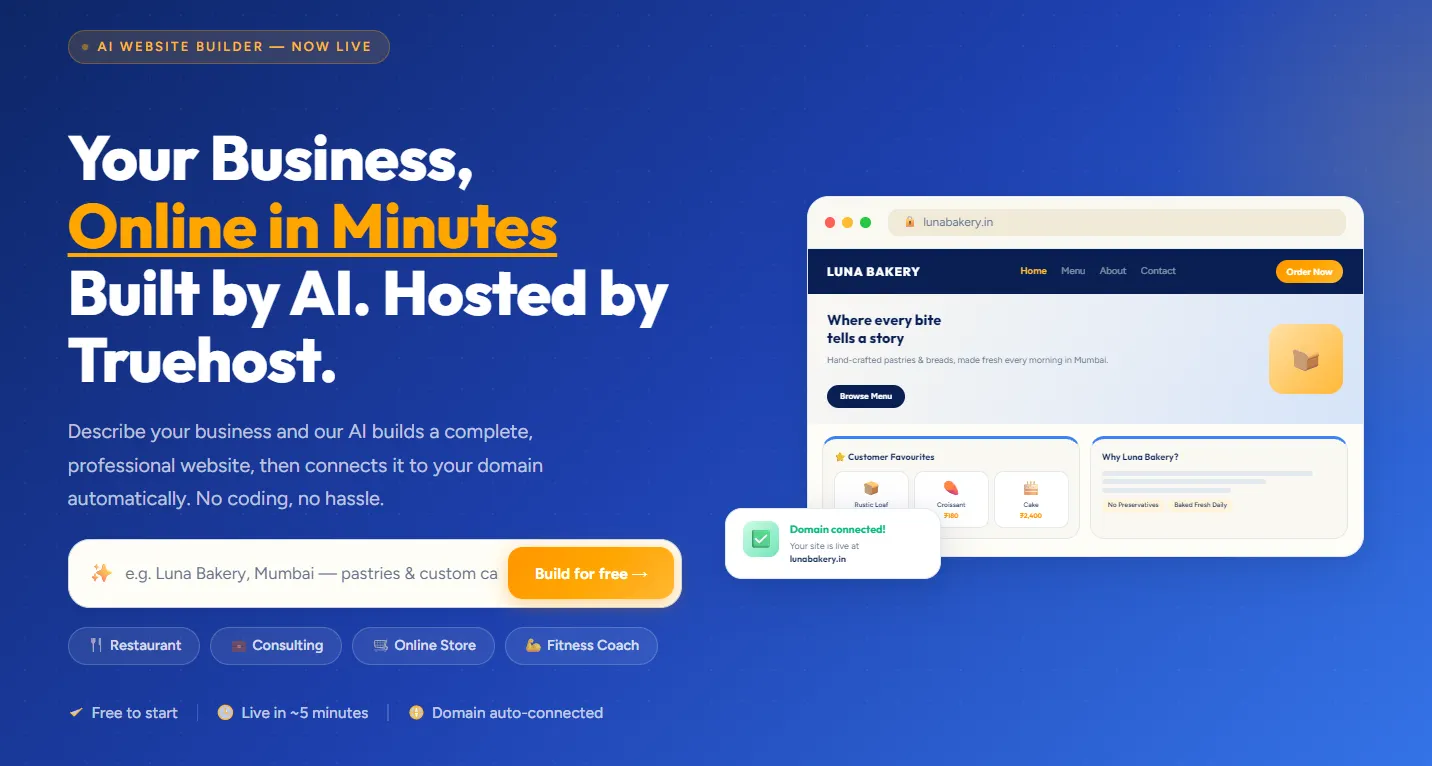
Truehost gives Indian businesses a straight path to get online. Pick a .in or .com domain and hosting built for Indian traffic. Then add an AI website builder to get a full site live in hours.
Pricing runs in INR, with UPI and card payments built in from day one. Start building your website with Truehost and take your place on this list before a competitor does.