 Web HostingBudget-friendly shared hosting plans
 Domains SearchFrom .com to unique country domains, explore and register extensions worldwide.
 WordPress HostingPower your blog or business with WordPress hosting.
 Email HostingSimple, secure email hosting that helps you stay connected and professional.
 Reseller HostingStart your own hosting business with easy and reliable reseller hosting plans.
 AffiliateJoin our affiliate program and earn commissions every time you bring in new customers.
 cPanel HostingHosting powered by cPanel, the world’s most user-friendly control panel.
 Windows HostingBuilt for Windows applications and websites
 IN Domain PricesDon’t miss out on the best domain deals in India!
 WHOIS LookupFind out who owns a domain name with a quick and easy WHOIS search.
 Domain TransferTransfer your domain to us and enjoy reliable support every step of the way.
 .Com DomainGet the most trusted domain for worldwide credibility
 All TldsSearch and register domain extensions worldwide.
 SSL CertificatesProtect your website with trusted SSL certificates and keep customer data safe.
 VPS HostingPowerful virtual servers. Full root access. Reliable uptime.
 Managed VPS HostingNot a tech expert? Choose our fully managed VPS service.
 Dedicated ServersTake full power and total control of your own physical server.
 AI Website BuilderCreate stunning websites instantly with our easy AI builder.
 Online ShopBuild your eCommerce store easily, no coding, just growth.
 Web Design ServicesGet a website built for your brand and designed for your goals.
 Contact UsReach out to us for support or questions.
 SupportGet answers and how-to guides for all our services.
 BlogRead our latest blogs on web hosting, online business, digital marketing, and other helpful topics.
Table of Contents
So you’ve been thinking about starting a blog.
Maybe you want to share your thoughts with the world, turn your passion into income, or build an audience around something you love.
Whatever your reason, that spark of an idea is the lowest-cost entry. But the practical steps ahead can feel confusing.
You might be asking yourself: “Do I need tech skills?” “What tools do I need?” or even “Can I do this without spending a fortune?”
You’re not alone. Most new bloggers face this uncertainty.
The good news? Yes, you can start. And yes, you can grow a blog without being a developer or marketing expert.
This article will show you how.
We’ll cover exactly what you need to start a blog, step-by-step setup instructions, and how Truehost can support you.
What Do I Need to Know Before Starting a Blog?
Before you start typing your first post, there are a few essentials you’ll want to have lined up.
Think of these as the foundation of your blog. Without them, you’ll be building in thin air.
1) Niche: What Will Your Blog Be About?
You need clarity on your blog’s purpose. This is called your niche.
A niche is simply the topic or subject you want to focus on consistently. For example:
- Travel
- Fitness
- Cooking
- Personal finance
Choosing a niche helps you target the right audience. It also makes writing easier because you’re talking to a specific group of people with shared interests.
The more focused your niche, the easier it is to grow your blog over time.
2) Target Audience: Who Are You Writing For?
Once your niche is clear, think about your audience.
Are you talking to beginners, experts, or maybe hobbyists?
Are you targeting professionals? Creatives? Young or old people?
What problems do they have? What questions do they ask?
Knowing your audience will help you write content that matters.
By addressing their concerns and writing in a language they relate to, readers will bookmark, share, and return to your blog.
If your blog is about, say, healthy eating, and you’re targeting college students. Your audience is probably looking for affordable, quick recipes. Not complex gourmet meals.
3) Basic Writing Skills
You don’t need to be an English expert. Blogging is often not about fancy writing; it’s about providing clear, helpful information.
Write like you’re explaining something to a friend.
What you need:
- Short paragraphs
- Clear headings
- Simple language
- Real examples
- Practical advice
Avoid:
- Long blocks of text
- Complicated words
- Copying content from others (let your personality shine).
4) A Content Plan
Most beginners fail because they start writing randomly.
You need around 15 blog post ideas before launching. This will help you produce content consistently, which is key if you want to grow.
Here’s how to find ideas:
- Your experience (What challenges did you face? What worked? What didn’t work?)
- Type your niche into Google and check “People also ask”
- Look at YouTube comments in your niche
- Check Quora India
5) Consistency and a Growth Mindset
Blogging is not a one-time project.
Your first blog might not be perfect, and you might face challenges, especially if you’re starting out.
This is expected. But don’t give up.
Plan to:
- Post 1–2 blogs per week
- Continue for at least 6 months
- Learn from mistakes and improve gradually
Consistency beats perfection.
How to Get Started Writing a Blog
So, you’ve already understood the requirements, and you’re ready to start your writing journey.
Here’s how:
Step 1) Validate Your Niche
Before committing, check if people are searching for your topics.
Go to Google and type in topics you might want to cover. If Google auto-suggests related phrases, that’s a good sign.
You can also use:
- Google Trends (check if interest is growing)
- Free keyword tools like Ubersuggest
If no one is searching for your topic, consider narrowing or adjusting it.
Step 2) Outline Your First 10 Articles
You need to outline your first 10 articles (could be more or less). Outlining makes writing faster and easier.
For each article:
- Think about what problem it solves
- Define the title
- List sub-titles
- Think of what you’ll write on each subtitle
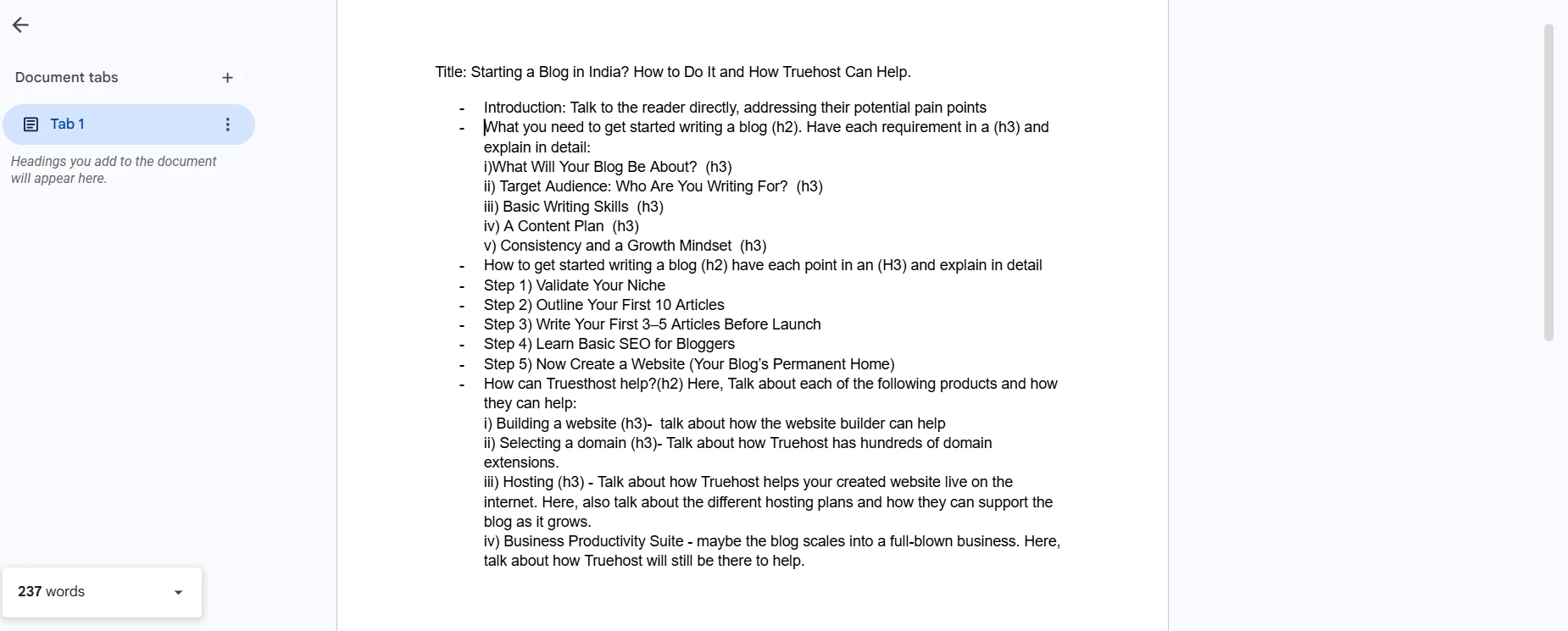
Real-life example: Below is my outline for this blog.
Step 3) Write Your First 3–5 Articles Before Launch
Yes, you need articles before launching.
This avoids the “empty blog” problem.
Aim for:
- 1,000–1,500 words per article (Could be more or less. Just make sure you cover the topic exhaustively).
- Practical, actionable advice
- Internal linking between posts
Step 4) Learn Basic SEO for Bloggers
SEO (Search Engine Optimization) might sound scary. But it’s not.
For beginners, focus on:
- One main keyword per article.
- Include it in:
- Title
- First paragraph (if possible)
- One subheading
- Meta description
- Use headings (H2, H3)
- Add images with descriptive names
- Write helpful content (not keyword stuffing)
Google rewards useful content.
Step 5) Now Create a Website (Your Blog’s Permanent Home)
If you’re serious about blogging, you need a place that belongs to you.
Platforms like Medium or Substack are great for exposure. But they are borrowed land.
When you build your own website, you own:
- Your content
- Your audience
- Your brand
- Your monetization options
That doesn’t mean you shouldn’t use Medium or Substack. You can absolutely repurpose content there to expand reach. But your main base should be your own website.
What You’ll Need to Build Your Website
To launch your own blog website, you’ll need three main things:
a) A domain name – This is your web address (e.g., yourblog.in).
b) Web Hosting – This is where your website files are stored so people can access them online.
c) A Blogging Platform (like WordPress) – This allows you to write, edit, and publish posts without coding.
Personalization and Brand Consistency Matter
Once you have your website, your job isn’t just publishing posts. You need to build a brand.
Brand consistency includes:
a) Visual Identity
- Same color scheme across pages
- Same fonts
- Clean layout
- Consistent image style
b) Tone of Voice
Are you:
- Formal and professional?
- Friendly and conversational?
- Bold and opinionated?
Pick one tone and stick to it.
c) Content Style
If you write step-by-step guides, keep them structured.
If you write opinion pieces, keep them thoughtful and analytical.
Consistency builds familiarity. Familiarity builds trust.
Essential Pages
Before publishing publicly, make sure your website includes:
- Home Page (introduces your blog clearly)
- Blog Page (where articles are listed)
- About Page (your story and expertise)
- Contact Page (email or contact form)
- Privacy Policy (important for legal compliance, especially if using ads or collecting emails)
These pages turn your blog from random articles into a professional platform.
Common Beginner Blogging Mistakes
Let’s quickly address mistakes that stop most blogs from growing.
I) Writing without strategy – Random posts don’t build authority. Stick to your niche and build a content plan.
II) Quitting too early – Most blogs take 4-8 months to have significant traffic growth. Don’t quit after 2 weeks.
III) Ignoring SEO – If you don’t optimize for search engines like Google, your content stays invisible.
IV) Not promoting content – Traffic doesn’t come automatically at first. Share wherever you can.
How Can Truehost Help You in Your Blogging Journey?
Now that you understand the blogging side, let’s talk about how Truehost can support you on the technical and growth side.
Building a Website
If coding scares you, Truehost’s website builder simplifies everything.
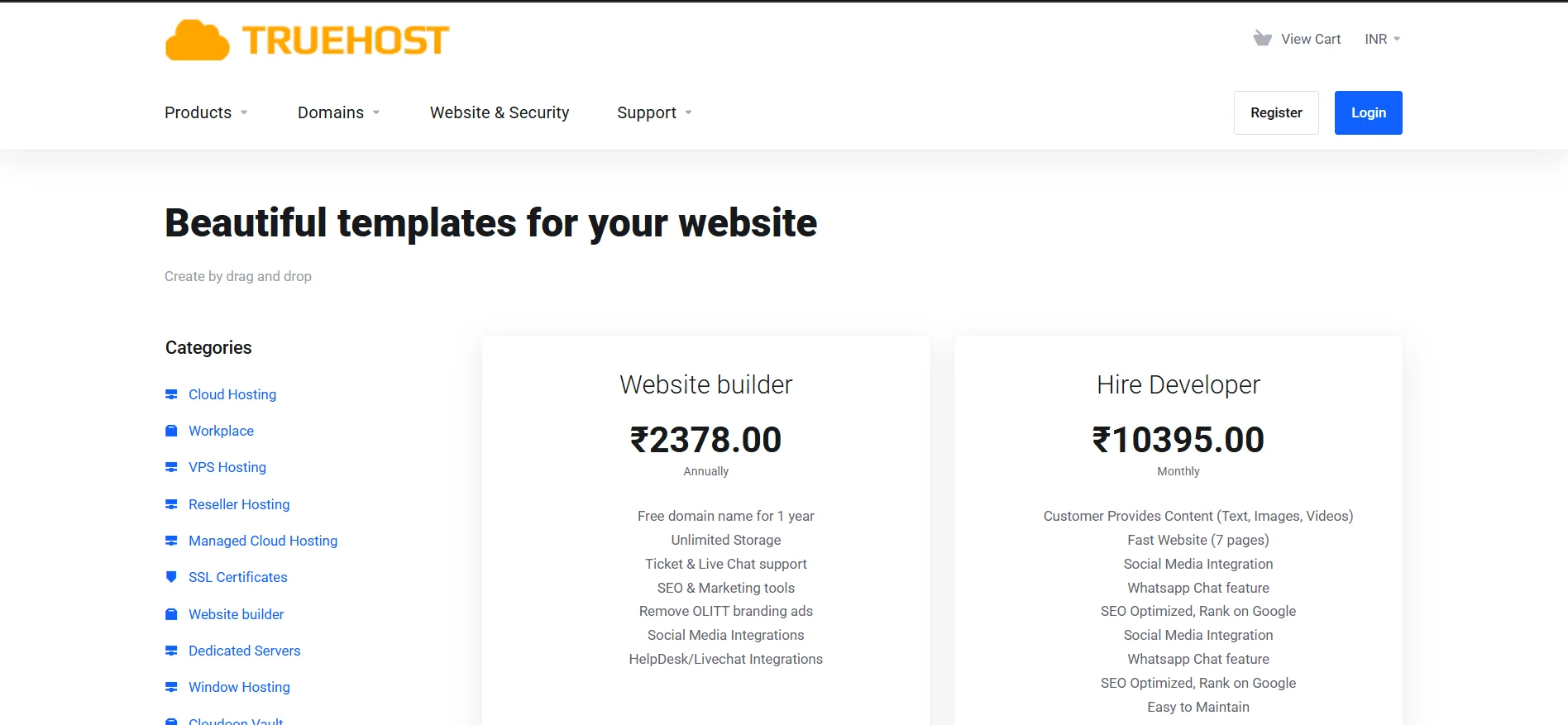
You can:
- Choose from ready-made templates
- Customize layouts using drag-and-drop
- Create blog sections easily
- Launch without technical skills
You can also hire a developer to do all this for you.
This means you can focus on content instead of figuring out design or code.
For beginners who don’t want to deal with complex installations, this is a big relief.
Selecting a Domain
Your domain name is more than just a web address.
It’s part of your brand identity.
At Truehost, we offer hundreds of domain extensions at the cheapest rates in India. These include:
- .blog
- .in
- .co.in
- .com
- .net
- Niche-specific extensions (.accountants, .beer, .baby, etc.)
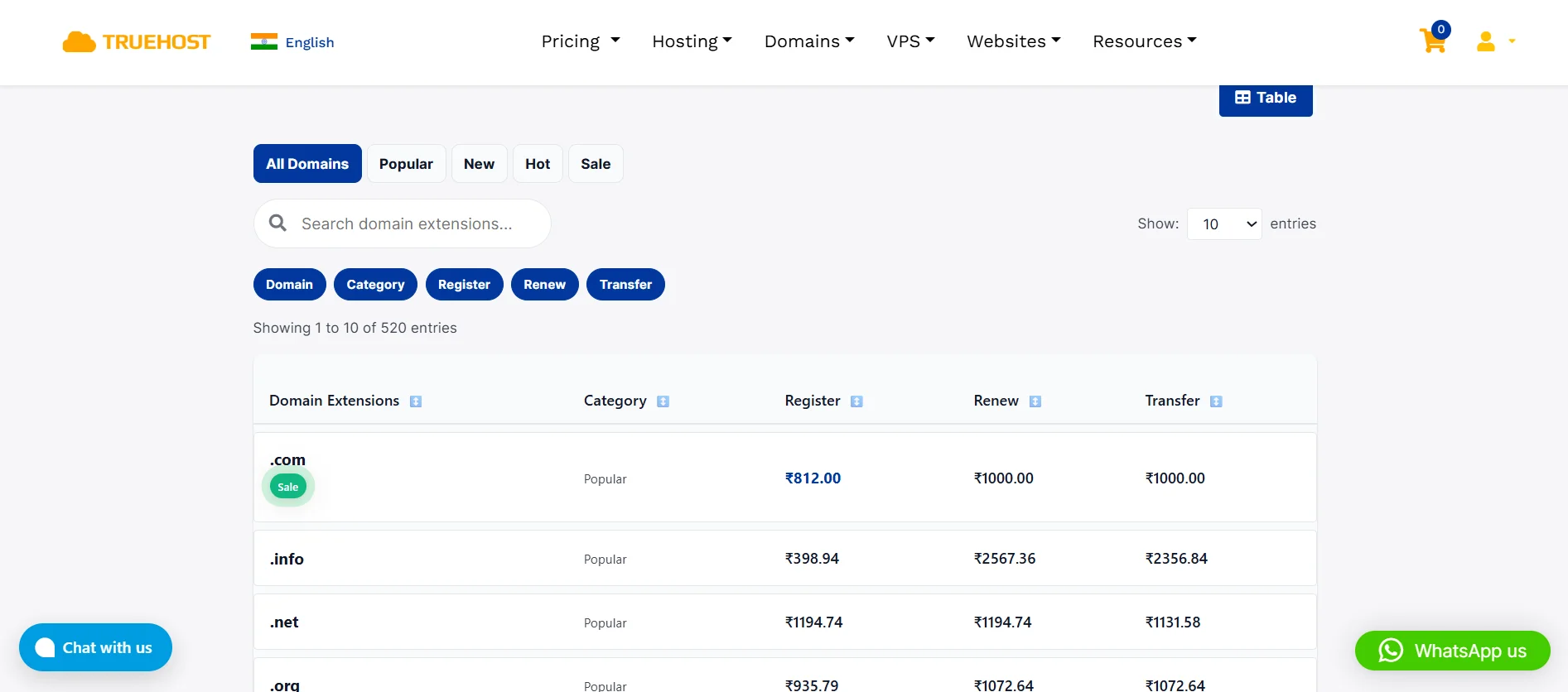
This flexibility allows you to:
- Secure your ideal name
- Protect your brand identity
- Avoid awkward alternatives
- Register multiple extensions if needed
Bonus Tip: If your blog focuses on Indian audiences, consider using a .in or .co.in domain extension. This is because search engines often associate country-specific domains with local authority. It signals: “This content is for people in India.”
Hosting: The Engine Behind Your Blog
If your domain is your address, hosting is the land your house sits on.
Without hosting, your blog doesn’t exist online.
But not all hosting is equal.
Bad hosting can cause:
- Slow loading speeds
- Frequent downtime
- Security vulnerabilities
- Poor SEO performance
All of which hurt your growth.
Truehost offers different hosting plans depending on where you are in your blogging journey:
Shared Hosting
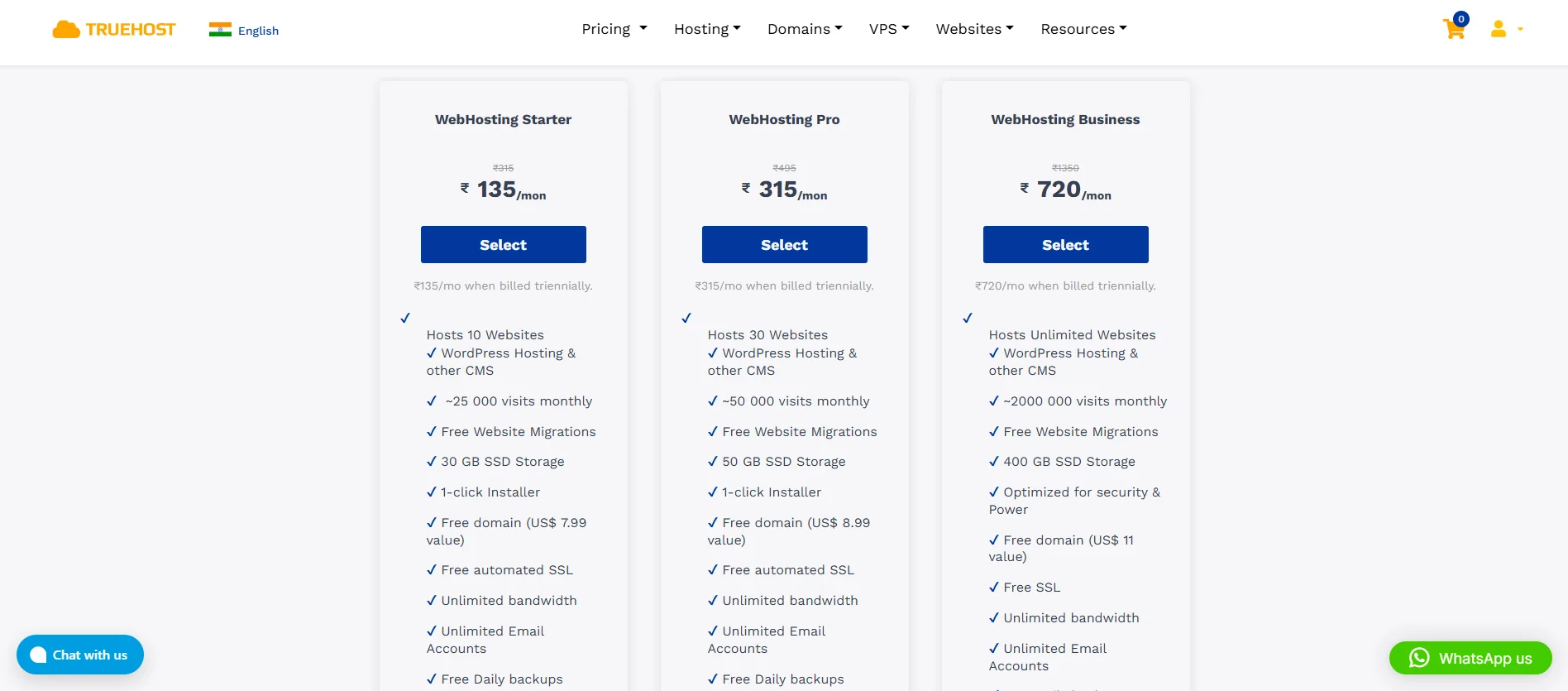
Ideal if:
- You’re just starting
- You expect low to moderate traffic
- You want affordable pricing
WordPress Hosting
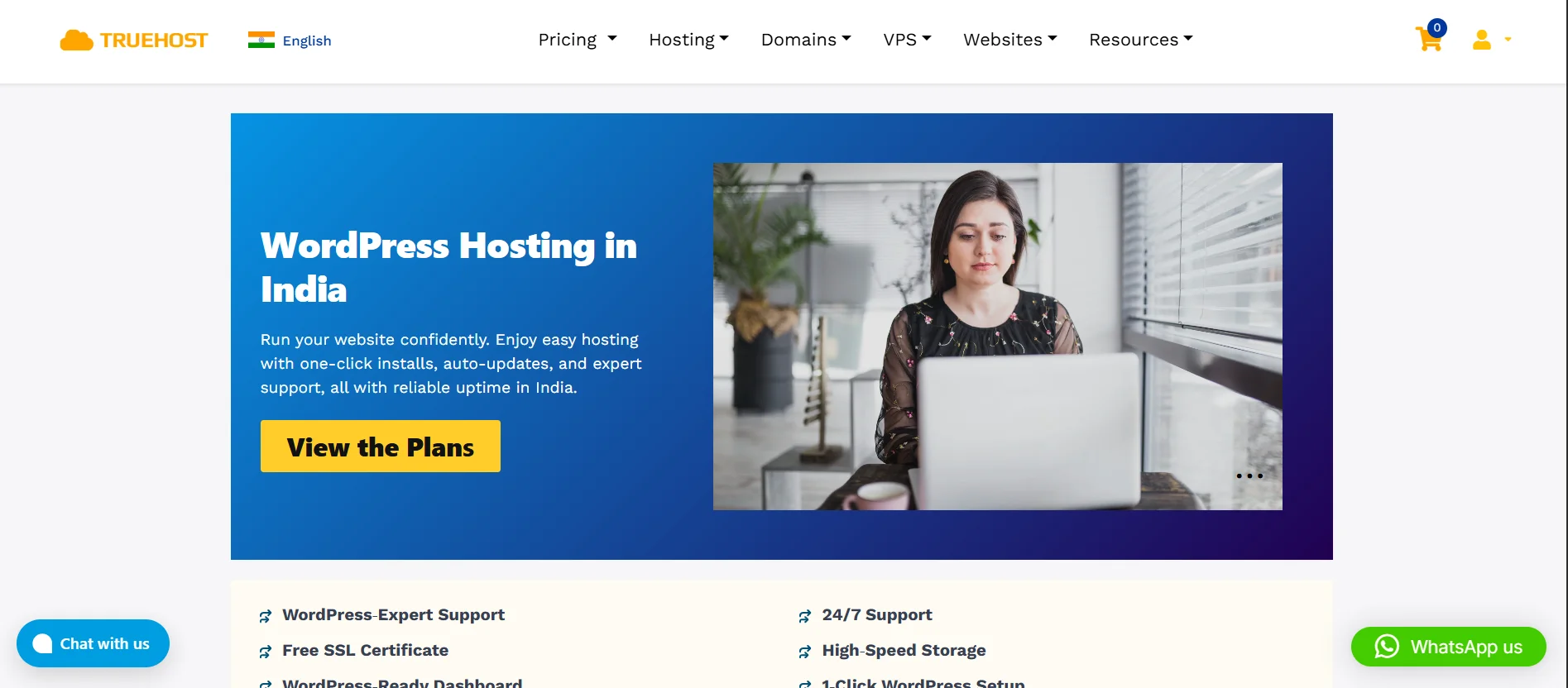
If you plan to use WordPress (which most bloggers do), WordPress hosting ensures:
- Faster performance
- Better security
- Easier installation
- Automatic updates
VPS Hosting
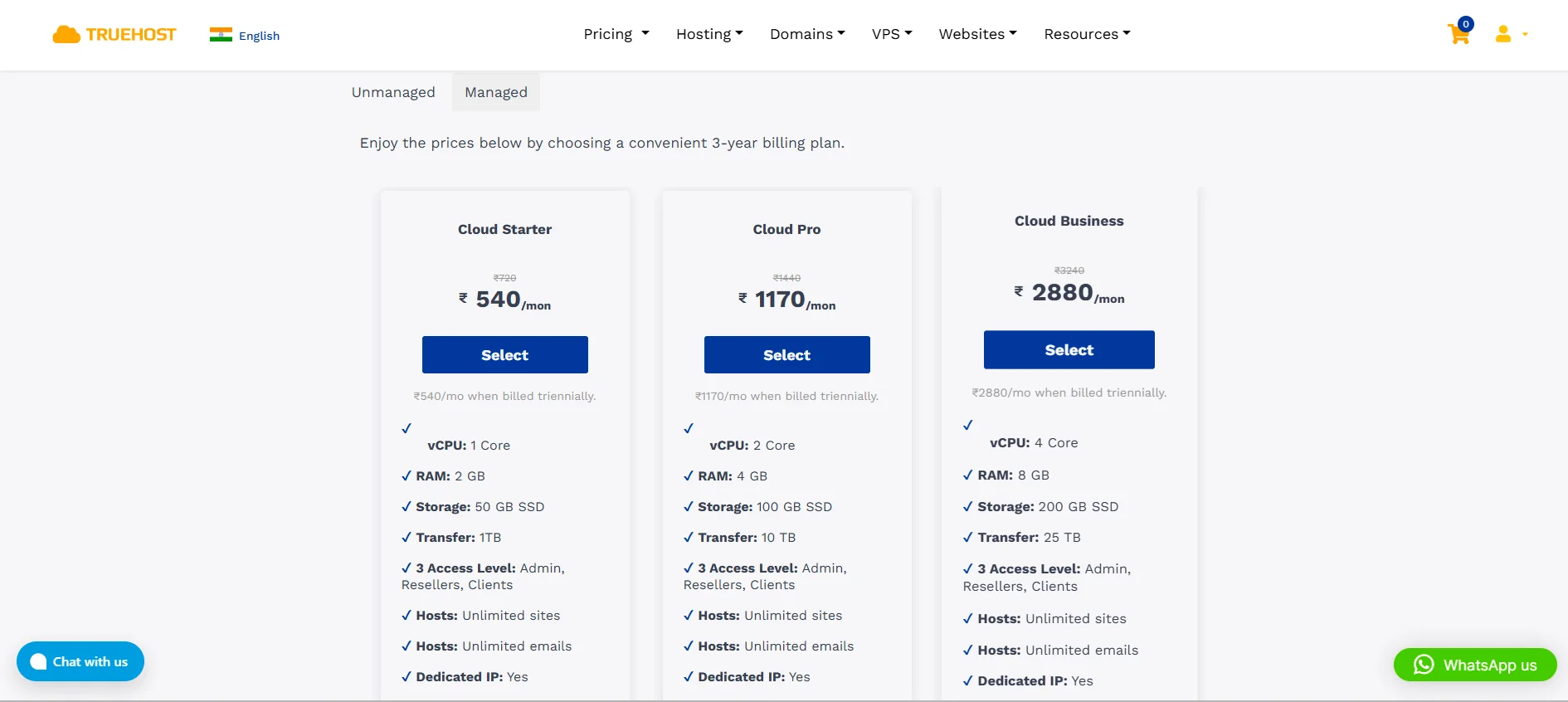
As your traffic increases, maybe after 6–12 months, you might need more power.
VPS hosting provides:
- Dedicated resources
- Better performance during traffic spikes
- Greater control
Here, we recommend having a managed VPS hosting plan, so you can focus on growing your blog and not on technical backend issues.
To learn more about the difference between these hosting plans, read:
What is VPS Hosting? A Guide for Indian Users
Shared Hosting vs VPS Hosting: What’s Best for Your Indian Brand?
Regular or WordPress Web Hosting? The Right Choice in India
Business Productivity Suite
What if your blog grows into something bigger?
Many bloggers eventually:
- Hire writers
- Work with brands
- Launch online courses
- Offer services
At this stage, you’ll need:
- Professional email ([email protected])
- Collaboration tools
- Secure document storage
Truehost’s Business Productivity Suite will support this growth.
Instead of switching providers later, you can scale within the same ecosystem.
Final Thoughts: Should You Start a Blog Now?
If you’ve been waiting for the perfect time, this is it.
India’s digital audience is growing rapidly. More people are searching online for solutions, advice, and trusted voices.
You don’t need fancy English, a marketing degree, tech expertise, or a big budget.
You just need a clear niche & audience, a writing plan, consistency, and the right technical support.
At Truehost, we will do our best to simplify the technical side so you can focus on your blog.
Visit our homepage to start your blogging journey with us.